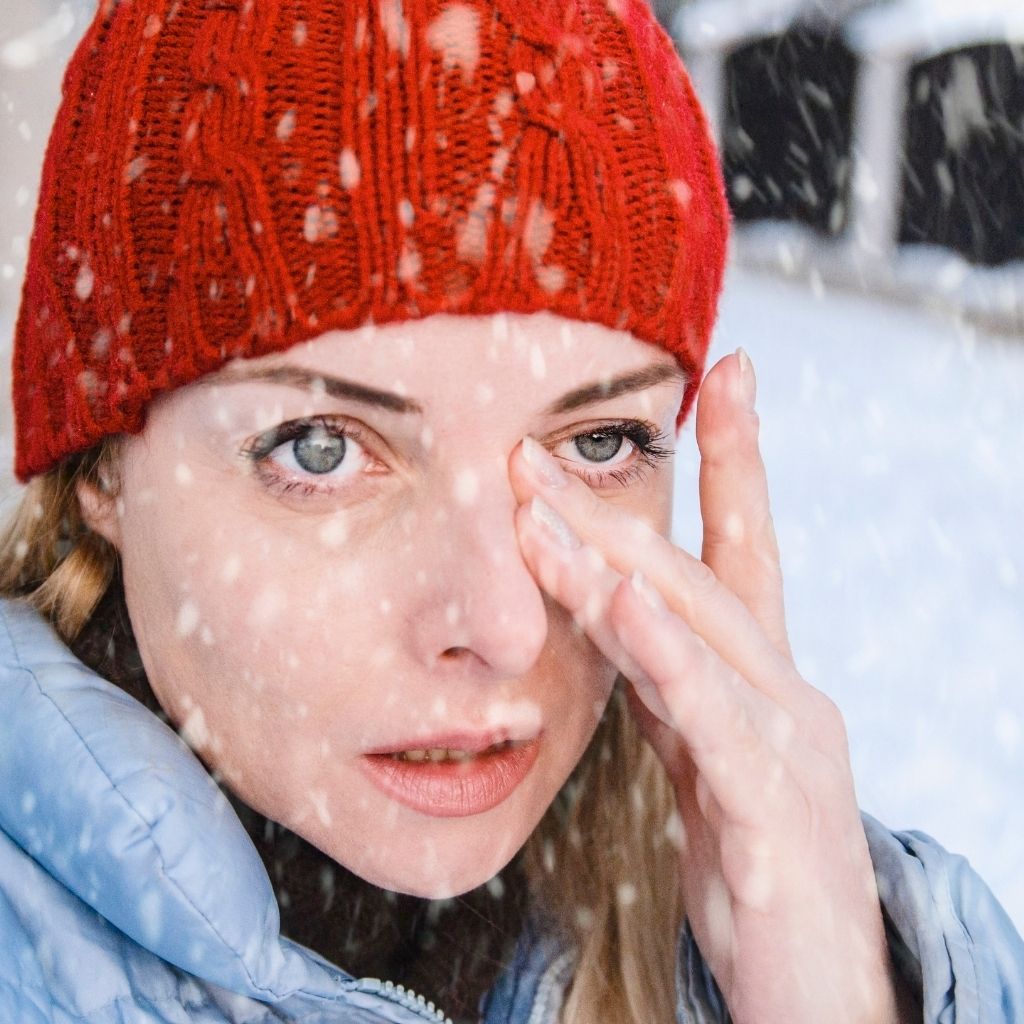
Winter has arrived, and you may be experiencing symptoms such as irritation, stinging, and a burning sensation ?
During the winter season, conditions such as cold temperatures, wind, and indoor heating worsen dry eye symptoms by increasing the evaporation of the tear film that covers the ocular surface.
Continue reading to learn the right habits to prevent dry eyes in winter!
Why are dry eyes common in winter?
Dry eyes are common in winter due to imbalances in the ophthalmic tear film.
This film is composed of an aqueous layer, a lipid layer and mucus, which together ensure eye lubrication and protection by trapping moisture.
Cold weather and dry air generated by indoor heating alter the lipid layer, which is essential for proper hydration of the ocular surface.
In addition, with aging, tear production decreases and tear quality may decline, promoting eyelid inflammation and eye irritation, which are symptoms of dry eye disease.
Dry eyes in winter and associated conditions
Certain chronic diseases can increase the likelihood of dry eyes in winter.
People suffering from lacrimal gland dysfunctions, such as those with Sjögren’s syndrome or blepharitis, are particularly prone to experiencing dry eyes during winter.
These conditions may lead to conjunctival inflammation and eyelid irritation, causing red, itchy eyes.
How to prevent and relieve dry eyes in winter?
If symptoms persist, the entire COP9 team strongly encourages you to consult a pharmacist, general practitioner, or ophthalmologist, who can help diagnose the underlying cause of dryness.
You may then receive appropriate treatment, such as preservative-free eye drops or punctal plugs to help retain moisture.
You can also adjust your diet to relieve dry eyes in winter.
We recommend incorporating omega-3 fatty acids into your meals, as they support tear production.
Dry eyes in winter and contact lens wear
Wearing contact lenses can worsen dry eyes in winter, especially when the ambient air is dry.
Contact lenses may interfere with the eyes’ natural lubrication, often requiring the use of ophthalmic eye drops to restore optimal comfort.
Keep in mind that prolonged contact lens wear during this period may aggravate dryness.
Dry eyes in winter: moisturizing solutions and eye drops
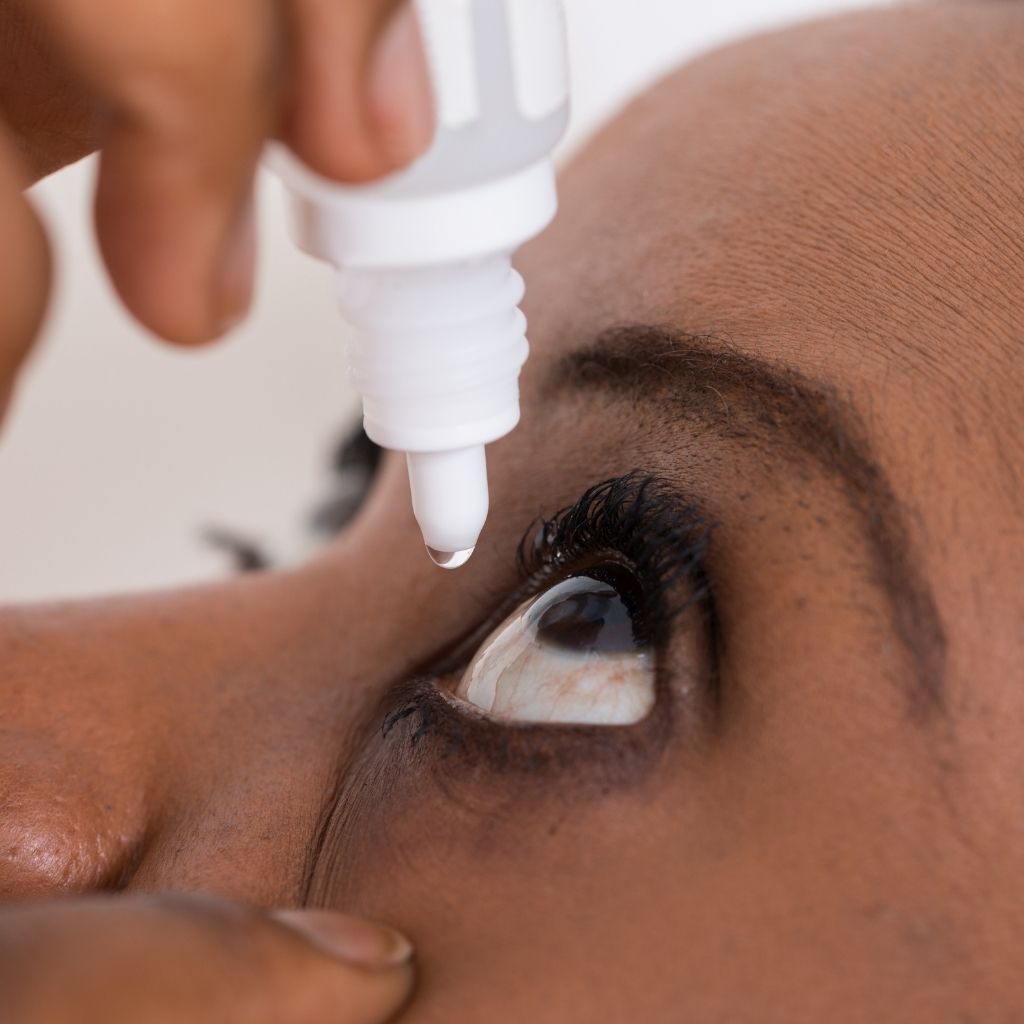
To relieve dry eyes in winter, lubricating eye drops play an essential role.
These eye drops are particularly effective at hydrating the eye’s mucous membranes and relieving discomfort caused by dryness.
Regular instillation of ophthalmic eye drops helps limit tear evaporation and reduces sensations of grit, stinging, and paradoxical watery eyes.
If symptoms persist, consultation with an ophthalmologist is recommended to guide you toward appropriate treatment.
Dry eyes in winter: when should you see an ophthalmologist?
When dry eye symptoms persist in winter, a specialist ophthalmology consultation is necessary.
Beyond the effects of cold weather, blockage of the lacrimal glands may contribute to dry eye syndrome, requiring appropriate treatment from a specialized ophthalmologist.
During comprehensive examinations, tear quality and the eye’s ability to remain lubricated are assessed, and vitamin A deficiency may also be investigated.
Early management helps prevent symptom worsening and ocular complications.
Dry eyes in winter, screens, and eye strain
Do not forget that even in winter, dry eyes can be worsened by prolonged screen exposure.
Extended computer use leads to significant eye strain and contributes to dry eye symptoms.
Long screen exposure reduces blink frequency, impairs tear film distribution, and increases discomfort.
Nous utilisons des cookies pour vous garantir la meilleure expérience sur notre site web. Si vous continuez à utiliser ce site, nous supposerons que vous en êtes satisfait.