National myopia awareness week 2025: understand, detect, and act
National Myopia awareness week 2025 is an educational event designed to raise public awareness about myopia, a rapidly increasing vision disorder, especially among children.
Dr. Stéphanie Zwillinger is taking part in this event and will share insights both in this article and on her social media channels from November 24 to 30, 2025!
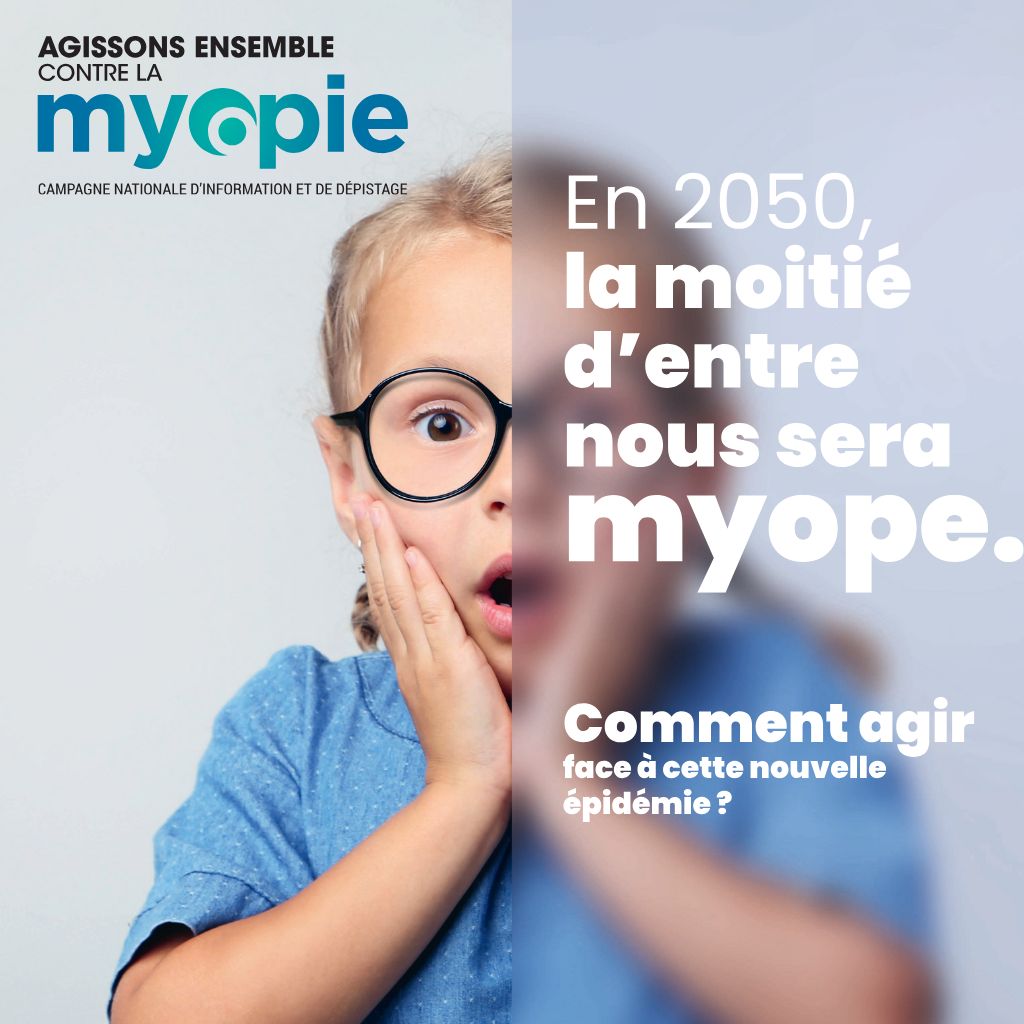
Myopia: a rising trend by 2050
Myopia is a refractive disorder characterized by difficulty seeing distant objects clearly, while near vision often remains good.
This visual defect is usually caused by an excessive curvature of the cornea or an elongated eye shape, leading to poor ocular refraction.
As a result, light rays focus in front of the retina rather than directly on it. Distant vision becomes blurry, sometimes accompanied by headaches or eye strain.
importance of comprehensive and regular eye examinations
Ophthalmologists carefully monitor binocular vision and focusing ability to ensure balanced, clear vision between both eyes.
A comprehensive ophthalmologic follow-up also helps assess corneal curvature, spherical refraction, and detect any ocular anomalies that could affect focus.
Keep this in mind during the National myopia awareness week 2025!
The 3 key recommendations of National myopia awareness week 2025
1 - I PREVENT my child’s Myopia
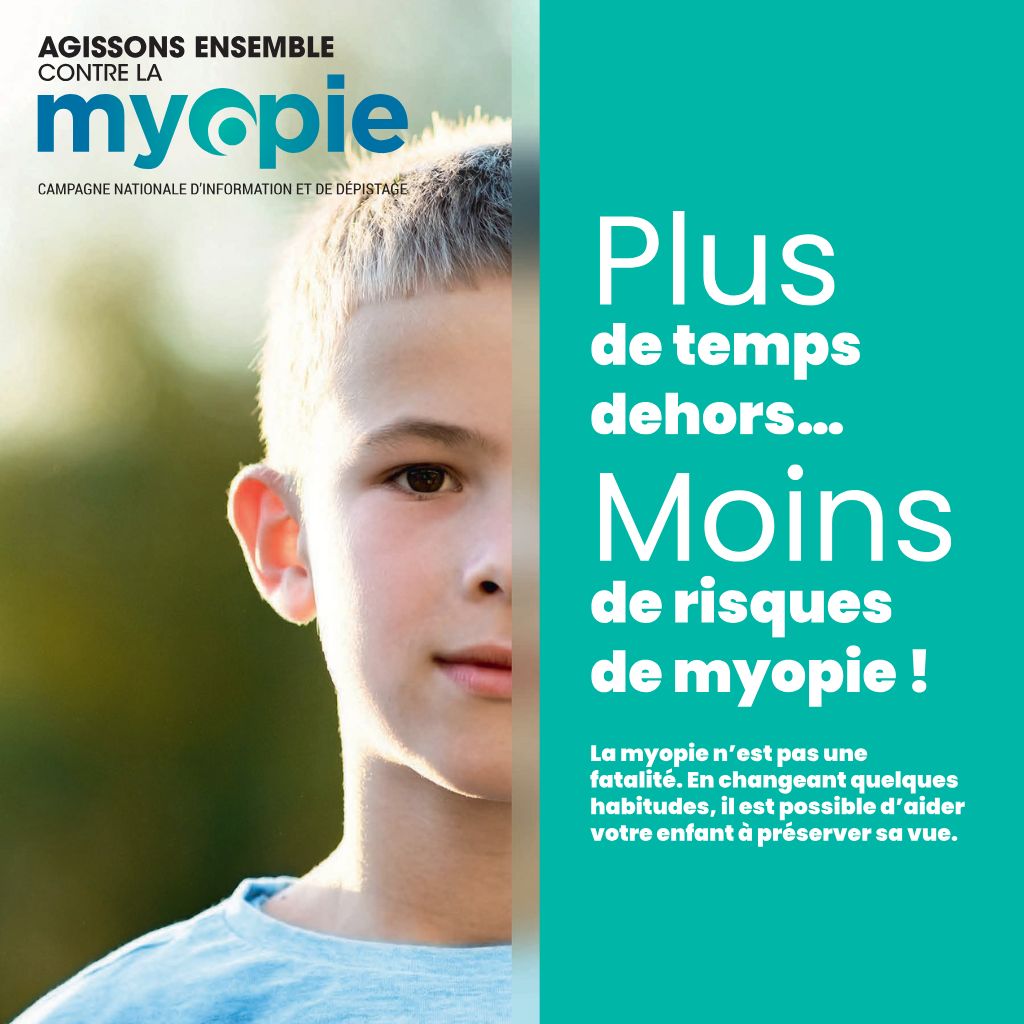
Eye care professionals recommend spending at least two hours outdoors daily to expose the retina to natural light, which is essential for healthy visual development.
They also advise to:
limit screen time,
take 20 second breaks every 20 minutes to look into the distance,
maintain at least 30 cm distance between eyes and books or screens.
These simple habits help maintain a healthy visual field and balanced focusing, reducing the risk of visual fatigue or myopia progression.
The lack of natural light affects eye growth and increases refractive disorders, leading to poorer distance vision.
Ophthalmologists and orthoptists can also educate parents about good visual hygiene, including:
proper lighting,
ergonomic workspace setup,
and sufficient sleep.
That’s why National myopia awareness week 2025 promotes a balanced lifestyle from childhood and daily vigilance to protect eye health and prevent early-onset visual fatigue.
2 - I DETECT my child’s Myopia early
National myopia awareness week 2025 promotes the importance of early screening. It is essential to detect the first signs of vision problems before they become disabling.
You should consult an ophthalmologist as soon as your child shows symptoms such as:
difficulty reading the classroom board,
squinting to see distant objects,
recurrent headaches.
The first eye examination should ideally take place before starting primary school, and then every two years thereafter.
During this specialized consultation, the practitioner performs a comprehensive vision assessment : visual acuity measurement, refractive evaluation (in diopters), visual field testing, and color vision assessment.
These tests help detect myopia and other visual disorders such as astigmatism or hyperopia.
Pediatric ophthalmology teams are trained to manage congenital eye diseases and visual focusing disorders.
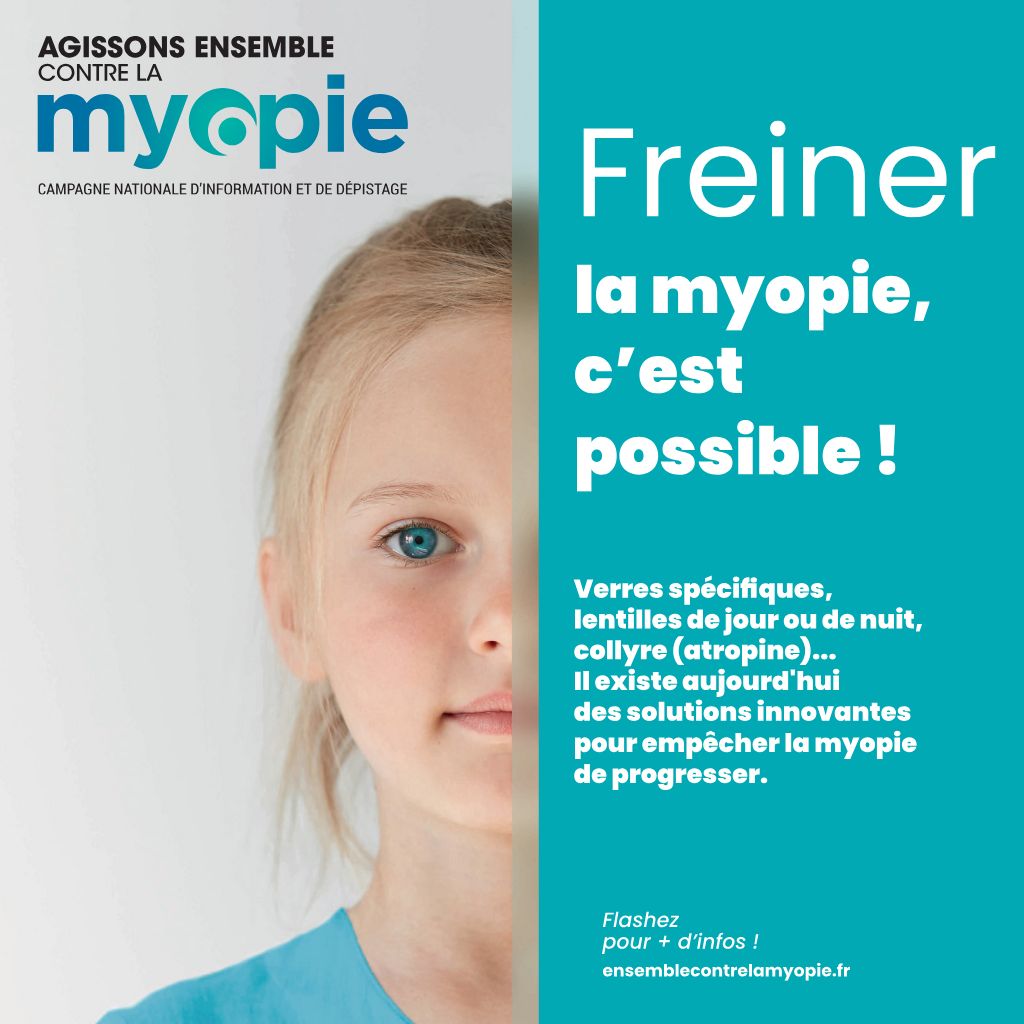
With an appropriate prescription, including glasses or myopia control lenses, a child’s vision can be corrected and stabilized from the first signs of decline.
For National myopia awareness week 2025, here is our ophthalmology reminder!
Regular eye check-ups help monitor corneal curvature and adjust optical correction according to measured diopters.
3 - I CONTROL the progression of my child’s myopia
Uncorrected or poorly managed myopia can, over time, lead to serious complications such as retinal detachment, glaucoma, cataract, or maculopathy.
Following your ophthalmologist’s recommendations is crucial.
This involves an appropriate prescription for glasses, as well as the regular use of corrective lenses or contact lenses.
National myopia awareness week 2025 is an important opportunity to raise public awareness about eye health, encourage ophthalmology consultations, and promote good visual hygiene.
During National myopia awareness week 2025, the main goal is to inform people that detecting and correcting myopia does more than sharpen distance vision : it helps preserve long-term ocular health, prevent complex refractive disorders, and maintain a wide and stable visual field throughout life.
With proper medical care and regular ophthalmologic follow-up, it is possible to limit the progression of myopia and ensure comfortable, balanced vision for both children and adults.
Nous utilisons des cookies pour vous garantir la meilleure expérience sur notre site web. Si vous continuez à utiliser ce site, nous supposerons que vous en êtes satisfait.