Dry eyes in summer: why are they more common and how can they be relieved?
Dry eyes in summer: why are they more common and how can they be relieved?
Dry eyes in summer affect many people, yet their causes are often underestimated.
Heat, air conditioning, wind and screen use can weaken the eye’s natural protective mechanisms and cause significant discomfort.
Learn why dry eye is more common during the summer, how to recognise the symptoms and which solutions can provide lasting relief.
Why do people experience dry eyes more often in summer?
Dry eyes in summer are a common problem that can be aggravated by several environmental and physiological factors.
Dry eye in summer is often caused by reduced or altered tear production, which may result from dysfunction of the lacrimal glands.
These glands produce the tear fluid needed to lubricate the ocular surface and maintain a healthy tear film.
During the summer months, dry eyes can quickly become a source of discomfort, causing a range of symptoms that may interfere with daily life.
Why are dry eyes more common in summer?
Summer weather and prolonged exposure to sunlight can cause tears to evaporate more quickly.
Hot, dry air reduces moisture on the ocular surface, worsening dry eye symptoms such as redness, irritation and stinging.
This problem is often aggravated by activities such as wearing contact lenses, which can also disrupt the lipid layer of the tear film and make the eyes feel even drier.
In addition, people tend to blink less frequently when spending long periods in front of a computer screen. This can lead to eye strain, which may be worsened by insufficient hydration of the conjunctival membrane and ocular surface.
Blinking regularly helps distribute the tear film evenly across the entire surface of the eye and reduces tear evaporation.
Some people may also have conditions such as dry eye syndrome or Sjögren’s disease, which reduce tear production.
This may be particularly relevant for women going through menopause, as hormonal changes can affect the eyes’ natural lubrication.
Which symptoms of dry eyes in summer should be a cause for concern?
Dry eyes in summer can cause several different symptoms. Other factors, such as seasonal allergies, may also lead to inflammation or conjunctivitis, further aggravating dryness.
It is also important to note that certain medications, including antihistamines and anti-inflammatory medicines, may reduce tear production and increase eye dryness.
Symptoms of dry eyes in summer may include burning, discomfort or a gritty sensation, as though there were sand in the eyes.
Itching, redness, paradoxical excessive tearing and irritation may also occur. Any symptom that persists for several days deserves particular attention.
How can dry eyes in summer be relieved?
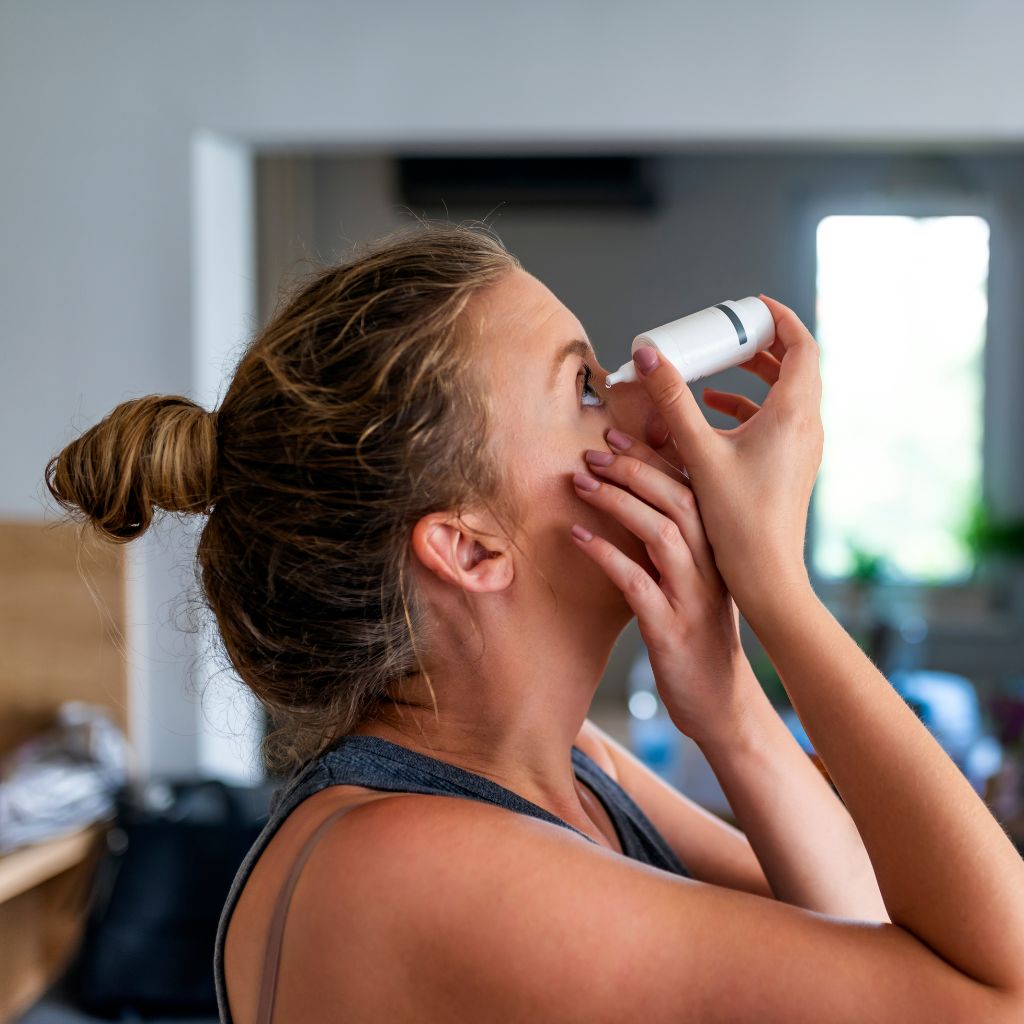
To relieve dry eyes in summer, the use of eye drops, also known as artificial tears, is generally recommended to help lubricate the ocular surface.
Regular use of these drops can help maintain moisture on the surface of the eyes, particularly during prolonged exposure to heat or dry environments.
Depending on the recommendations provided, several applications per day may be necessary to preserve ocular comfort.
Moist compresses may also be applied to the eyelids to relieve inflammation and irritation.
Staying properly hydrated and remembering to blink more frequently can also help reduce the effects of dry eyes in summer.
When should you consult an ophthalmologist about dry eyes in summer?
It is advisable to consult an ophthalmologist if symptoms persist or become worse.
Depending on the underlying cause of the dry eye in summer, an ophthalmologist may recommend specific treatments, such as punctal plugs to help retain tears or ophthalmic ointments to provide longer-lasting lubrication.
An eye examination can assess lacrimal gland function, tear film quality and the condition of the ocular surface, allowing the ophthalmologist to recommend appropriate treatment.
Conclusion
Dry eyes in summer often result from a combination of excessive tear evaporation, lacrimal gland dysfunction and other environmental or medical factors.
Managing this condition requires proper hydration, the appropriate use of tear substitutes and, where necessary, consultation with an ophthalmology specialist to receive suitable treatment.
If burning, discomfort, itching, excessive tearing or a persistent gritty sensation occurs, consulting an ophthalmologist promptly can help identify the cause and establish an effective treatment plan.
Nous utilisons des cookies pour vous garantir la meilleure expérience sur notre site web. Si vous continuez à utiliser ce site, nous supposerons que vous en êtes satisfait.