Dyslexia and visual disorders: what is the role of the ophthalmologist?
Dyslexia and visual disorders can sometimes both be associated with difficulties children experience at school.
However, dyslexia is primarily a learning disorder that particularly affects reading, rather than simply a vision problem.
So, how can you tell whether visual disorders may be making everyday life more challenging for a child with dyslexia? And what role can the ophthalmologist play?
In this article, find out how different healthcare professionals can work together to better understand the causes of these difficulties and provide the child with appropriate support.
Dyslexia and visual disorders: what is the connection?
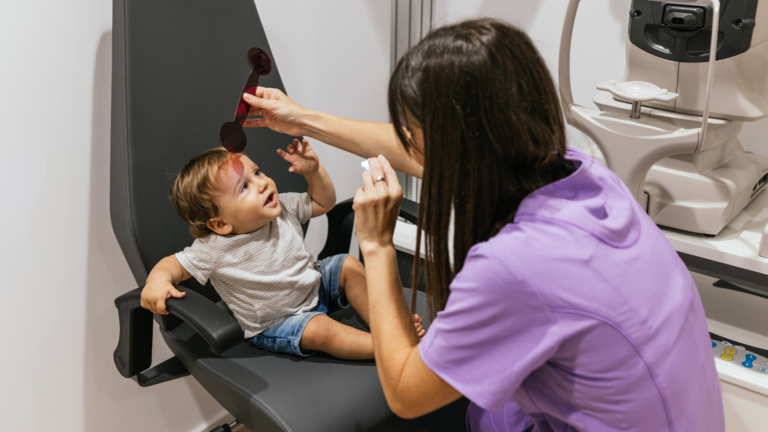
The ophthalmologist plays an essential role in the diagnosis and care of children with dyslexia, particularly in relation to written and spoken language disorders.
When parents suspect that their child is experiencing reading difficulties, early screening is crucial.
The ophthalmologist is often one of the first healthcare professionals consulted in this context.
They carry out a comprehensive eye examination to ensure that there are no vision problems that could mask or worsen learning difficulties.
Indeed, visual disorders can affect language acquisition and the ability to memorise sounds and phonemes, which may complicate the initial diagnosis of dyslexia.

Understanding the causes of a child’s difficulties
When a child is struggling at school, identifying the exact cause is essential.
Dysfunction affecting cognitive functions or certain areas of the brain may be at the root of these difficulties.
Understanding the distinction between dyslexia and visual disorders is therefore important. Whether the child has a learning disorder of neurological origin or simply a visual problem, targeted assessments, including a neuropsychological assessment, can help clarify the diagnosis.
Students with dyslexia or other dys disorders may experience a range of difficulties, including reading difficulties (reading disorders), writing difficulties (dysgraphia), as well as dyspraxia or dyscalculia.
Specific language disorders, such as developmental language disorder (dysphasia) or instrumental function disorders, can also affect a child’s learning.
These disorders can have a direct impact on children’s learning and sometimes lead to significant academic difficulties.
Dyslexia and visual disorders: which visual disorders may be associated with dyslexia?
A child with dyslexia may also have associated visual disorders, such as refractive errors, convergence insufficiency or ocular motility disorders.
The ophthalmologist may recommend visual adaptations to help compensate for these difficulties.
In such cases, vision correction with glasses, or orthoptic and MoveR sessions, can help reduce eye strain and improve reading comfort.
Dyslexia and visual disorders: what is the role of the ophthalmologist?
The ophthalmologist intervenes before speech and language therapy to ensure optimal visual function.
By ruling out or correcting a vision disorder and, where necessary, prescribing an orthoptic assessment, the ophthalmologist ensures that the child is not experiencing additional eye strain.
This medical care then allows the speech and language therapist to begin written language therapy once optimal visual function has been ensured.
A coordinated healthcare pathway for personalised support
To establish a coherent healthcare pathway, the involvement of specialists such as a speech and language therapist is essential.
They can help the child compensate for their difficulties in everyday life through targeted therapy. At the same time, educational accommodations can be put in place in the classroom to help overcome these obstacles.
If the student requires additional support or adapted equipment, the family can contact the MDPH (Departmental Centre for Disabled Persons) to apply for official assistance and help ensure that the child receives appropriate support throughout their education.
Dyslexia and visual disorders: why is a comprehensive assessment important?
A learning assessment is often necessary to identify the different types of difficulties experienced by the child.
This assessment provides a comprehensive evaluation of cognitive abilities and specific deficits, both auditory and visual.
By identifying the nature of the difficulty, healthcare professionals can better target the necessary interventions.
If underlying neurological disorders or language delays are identified, the ophthalmologist may also refer families to specialists such as developmental paediatricians or child psychologists.
Ophthalmologists can then explain how these visual disorders may interact with the difficulties associated with dyslexia, helping to provide a more comprehensive understanding of the child’s situation.

Dyslexia and visual disorders: why is early intervention important?
It is important to remember that children with learning disorders, whether they have dyslexia, dyspraxia or dysorthography, require ongoing support.
Ophthalmologists play a preventive role by identifying vision problems at an early stage that could further complicate the child’s education.
Indeed, early intervention can help limit the impact of these difficulties on the child’s intellectual and emotional development, while helping to prevent academic failure and the significant difficulties that may follow.
Finally, collaboration between ophthalmologists, speech and language therapists, teachers and parents is crucial to ensure appropriate follow-up for children with dys disorders.
By working together, they can better identify these types of difficulties and help compensate for learning difficulties affecting written and spoken language.
In this context, each child should be assessed individually in order to better understand the causes of their difficulties and provide appropriate support.
In conclusion
The ophthalmologist plays an essential role in the care of children with dyslexia by screening for and assessing visual problems that may interfere with learning.
Through a collaborative and integrated approach, healthcare and education professionals can help make the educational journey easier for children with dyslexia and enable them to develop their skills to their full potential.