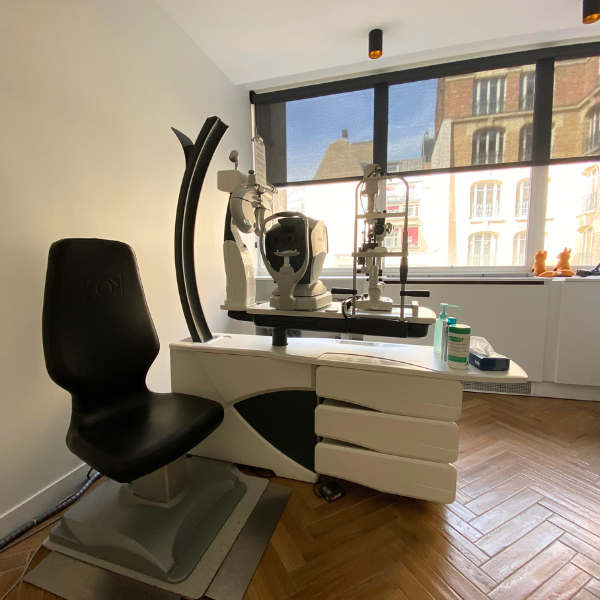
At the COP9 clinic in Paris, we support both children and adults in their visual health with immersive orthoptic therapy.
This playful and innovative method, developed by MoveR, helps rehabilitate the eyes while making sessions more enjoyable!
Discover how this innovation is transforming the care pathway, and why it is essential to keep reading to fully understand its benefits.
Immersive orthoptic therapy: an innovation for all
Once the visual screening is complete, immersive orthoptic therapy is integrated into a coordinated care pathway.
Through virtual environments, patients stimulate their visual abilities, engaging both eyes in targeted and interactive exercises.
Immersive orthoptic therapy is particularly useful for working on color vision, ocular movements, and central vision.
It is important to note that if you wear prescription glasses, you must bring them to each session, as they are an integral part of the treatment’s success.
At COP9, we provide immersive orthoptic therapy as a unique approach within a complete ophthalmology care pathway. This innovative treatment uses technology to support visual rehabilitation, enhance quality of life, and ensure personalized patient follow-up.
Immersive orthoptic therapy is an innovative approach designed to stimulate visual rehabilitation and orthoptic treatment in patients with various vision disorders, such as amblyopia, strabismus, and deficiencies related to eye movements.
This method uses virtual environments to stimulate visual rehabilitation, harnessing the principles of the brain’s neuroplasticity.
Link with visual acuity and common eye conditions
Visual acuity, which refers to the eye’s ability to distinguish fine details, is often affected by conditions such as myopia, hyperopia, astigmatism, or age-related macular degeneration (AMD).
Immersive orthoptic therapy addresses these challenges by providing visual rehabilitation exercises tailored to each patient.
As part of immersive orthoptic therapy, with or without virtual reality glasses, our orthoptists can target specific areas of the visual field, improving binocular vision and enhancing color perception.
Personalized and engaging visual exercises
During immersive orthoptic therapy, the exercises are designed to stimulate convergence and accommodation (the eye’s ability to adjust focus for clear vision both near and far). Through immersive virtual scenarios, patients train in a motivating and engaging environment.
This encourages adherence to therapy, even among children, and makes rehabilitation far less restrictive.
These exercises also target:
the fluidity of eye movements,
depth perception,
balance between the two eyes,
the reduction of visual fatigue caused by intensive screen use.
Which patients can benefit from immersive orthoptic therapy?
Immersive orthoptic therapy is suitable for a wide range of patients:
Children in pediatric ophthalmology follow-up, to treat strabismus or amblyopia.
Adults with visual fatigue or convergence-related disorders.
Patients in rehabilitation after retinal detachment surgery, cataract surgery, or refractive procedures.
Patients with chronic eye conditions, such as diabetic retinopathy.
Personalized follow-up for every patient
Whether they suffer from mild vision problems or more serious conditions such as diabetic retinopathy or cataract complications, all patients benefit from a personalized visual rehabilitation program.
Preliminary orthoptic assessments and ophthalmological exams allow specialists to determine the most appropriate therapeutic approach, based on each patient’s medical history and specific needs.
During immersive orthoptic therapy sessions, the exercises are designed to train ocular convergence and improve accommodation, the eye’s ability to focus on near objects.
Eye movements are practiced in a motivating and playful environment, making rehabilitation less restrictive for patients.
Each treatment plan for immersive orthoptic therapy begins with an ophthalmology consultation and an orthoptic assessment, determining whether a MoveR program is suitable.
Integration into a complete care pathway
This immersive orthoptic therapy approach can also include functional vision tests, such as refraction or complementary exams, to evaluate progress of the patient.
Beyond direct visual training, immersive orthoptic therapy also plays a key role in the rehabilitation of patients recovering from surgery, such as retinal detachment or other refractive procedures.
The central role of COP9 in your ophthalmology care pathway
At our ophthalmology clinic in Paris, we place the patient at the center of their care journey. Our mission is to ensure continuity between screening, diagnosis, potential prescription of glasses, and immersive rehabilitation sessions.
We ensure that every patient benefits from:
personalized follow-up,
a specialized consultation tailored to their age and condition,
a multidisciplinary approach,
a regular monitoring to adjust treatment if needed.
Importance of medical follow-up
Regular follow-up with an ophthalmologist is essential to monitor the evolution of visual health and adjust corrective lens prescriptions when needed.
Our goal is simple: to preserve eye health and improve visual function through modern and tailored solutions.
Each care pathway begins with a complete ophthalmological or visual examination, carried out by both an ophthalmologist and an orthoptist.
This collaborative work ensures an accurate diagnosis, taking into account conditions such as amblyopia, strabismus, and visual disorders affecting near or distance vision.
For younger patients, Dr. Stéphanie Zwillinger, a specialist in pediatric ophthalmology, provides dedicated consultations and adapted orthoptic assessments.
The importance of early screening and accurate diagnosis
Before starting a MoveR immersive therapy program, it is essential to consult an ophthalmologist.
At COP9, we provide a complete eye examination, which includes:
a comprehensive visual assessment,
an ophthalmological assessment tailored to every age,
a specialized pediatric ophthalmology consultation for children,
an accurate diagnosis to define the most appropriate therapeutic strategy.
These steps are essential to ensure effective and personalized care.
Early diagnosis to prevent visual complications
It is essential to consult an ophthalmologist at the first signs of visual disorders.
An early diagnosis helps prevent complications such as convergence insufficiency, headaches, or diplopia (double vision).
By integrating immersive orthoptic therapy into a coordinated ophthalmology care pathway, COP9 contributes to improving not only visual function but also each patient’s quality of life.
It is therefore crucial that anyone experiencing vision problems schedules an appointment with an eye specialist for early screening and appropriate medical follow-up, including surgical intervention if necessary.
This early detection of visual problems helps prevent complications such as poor convergence or ocular deviations that can lead to eye strain, headaches, or double vision.
In conclusion
In summary, immersive orthoptic therapy represents a major advancement in modern ophthalmology, combining cutting-edge technology and clinical expertise to enhance visual function and quality of life for patients suffering from a wide range of eye disorders.
Nous utilisons des cookies pour vous garantir la meilleure expérience sur notre site web. Si vous continuez à utiliser ce site, nous supposerons que vous en êtes satisfait.