Pediatric hyperopia is a common refractive error in young children.
Pediatric hyperopia may go unnoticed for several years, as the eye can partially compensate for this visual defect through the accommodation of the lens.
However, when this compensation becomes insufficient, vision problems may appear and interfere with learning and visual comfort of the child.
Understanding pediatric hyperopia will help you detect early signs and adopt appropriate corrective solutions. Discover our COP9 article to learn more.
What is pediatric hyperopia?
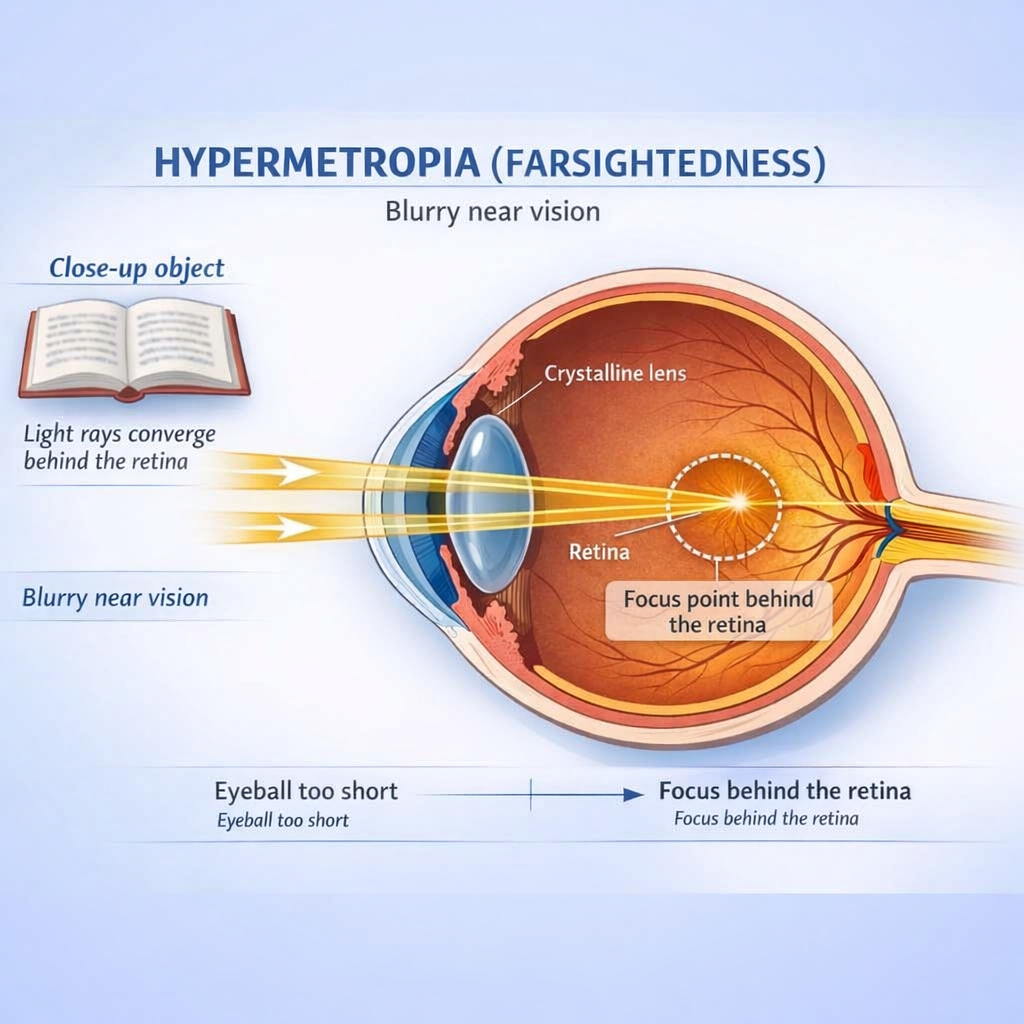
Pediatric hyperopia is a refractive error characterized by difficulty seeing nearby objects clearly, often caused by insufficient curvature of the cornea or a shorter-than-normal eyeball.
When light rays enter the eye, they focus behind the retina, resulting in blurred near vision.
This visual condition may affect one eye or both eyes and can lead to vision problems that are difficult for a young child to describe.
In pediatric hyperopia, the eye must constantly exert effort to maintain clear vision.
Children with pediatric hyperopia may also experience increased eye strain, as their eyes continuously accommodate to compensate for this visual defect.
How does pediatric hyperopia present in young children?
In young children, pediatric hyperopia can be difficult to detect because they are not always able to describe their vision clearly.
However, several signs may alert parents to a possible visual disorder.
A child may have difficulty seeing up close, hold books very close, or show reduced concentration during school activities. This constant accommodation effort may lead to headaches, eye strain, visual disturbances, and general discomfort.
The continuous effort of the lens to compensate for the visual defect may also reduce overall visual comfort and affect the visual field during certain tasks.
How is pediatric hyperopia diagnosed?
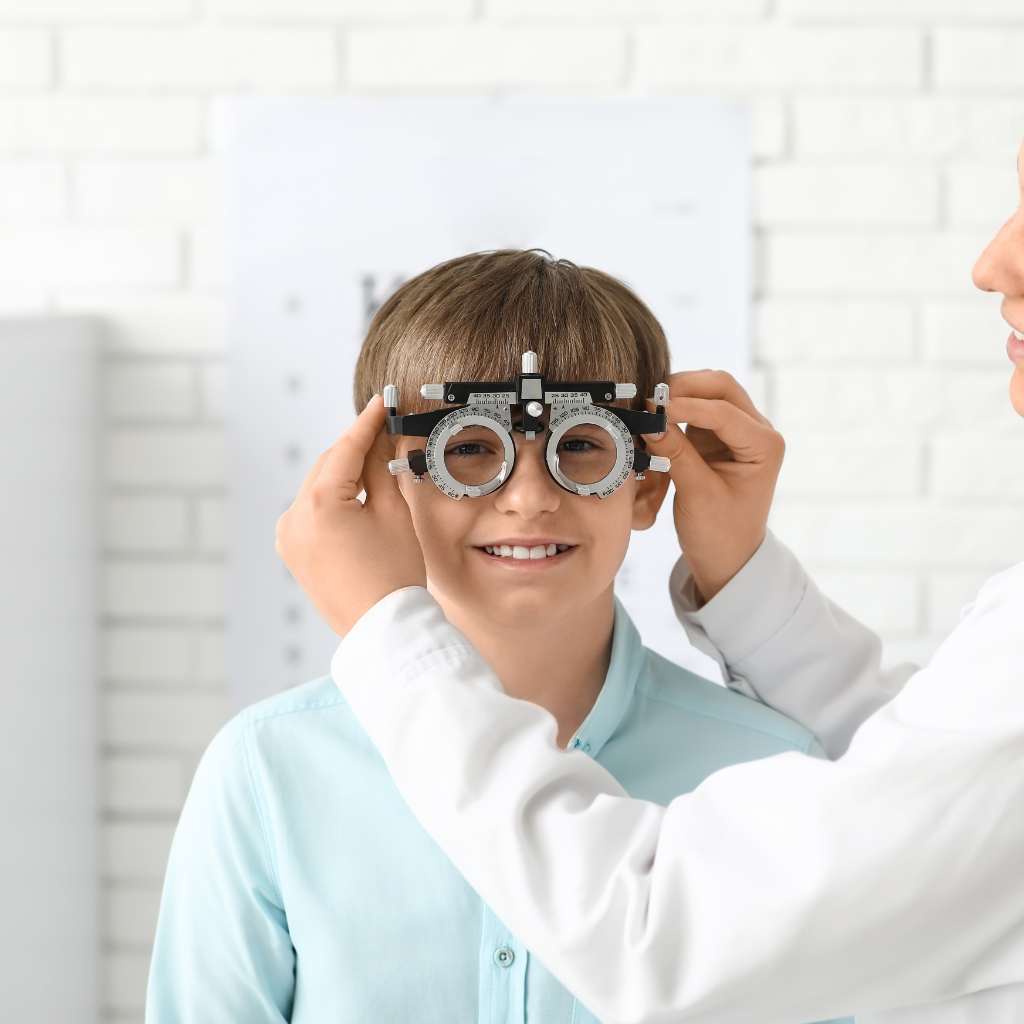
To diagnose pediatric hyperopia, a comprehensive eye examination performed by an ophthalmologist or orthoptist is essential.
Using specialized instruments, the professional can measure the diopters required to determine the appropriate strength of corrective glasses or contact lenses.
This measurement allows precise identification of the refractive error and helps establish an appropriate prescription.
These ophthalmological examinations also assess corrected visual acuity and evaluate the entire visual field to detect any associated conditions.
What are the treatment options for pediatric hyperopia?
If a child is diagnosed with pediatric hyperopia, corrective lenses may be prescribed, usually spherical or sphero-cylindrical in cases of associated astigmatism.
The goal of our ophthalmologist is to improve both near and distance vision, ensuring proper accommodation and clearer vision of nearby objects.
Wearing glasses is the most common corrective solution for pediatric hyperopia.
These glasses help correct vision by allowing light rays to properly focus on the retina.
In some cases, contact lenses may be considered, particularly in older children with active lifestyles or sports needs.
Why is follow-up essential in pediatric hyperopia?
It is important to note that pediatric hyperopia can vary from one child to another and may evolve over time.
Regular follow-up with eye care professionals is therefore recommended to monitor any changes.
This ophthalmological follow-up also helps prevent complications such as strabismus or amblyopia, two eye conditions that may develop if pediatric hyperopia is not properly managed.
Regular monitoring allows adjustment of visual correction and ensures optimal visual acuity throughout the child’s development.
Our COP9 Team
Conclusion
Pediatric hyperopia is a common vision disorder in children that can impact both learning and visual comfort.
With early detection, appropriate eye examinations, and suitable corrective solutions, it is possible to ensure clear vision and healthy visual development.
Regular follow-up helps effectively correct vision and support the child throughout growth while preserving long-term eye health.
Nous utilisons des cookies pour vous garantir la meilleure expérience sur notre site web. Si vous continuez à utiliser ce site, nous supposerons que vous en êtes satisfait.