Bullous keratopathy is a relatively unknown eye condition that can nonetheless have a major impact on quality of life and vision.
With symptoms ranging from pain to visual discomfort and potential complications, it is essential to understand how it works.
Keep reading this article, where we explain in clear and accessible terms the symptoms, causes, and treatment options to better manage bullous keratopathy.
What is bullous keratopathy?
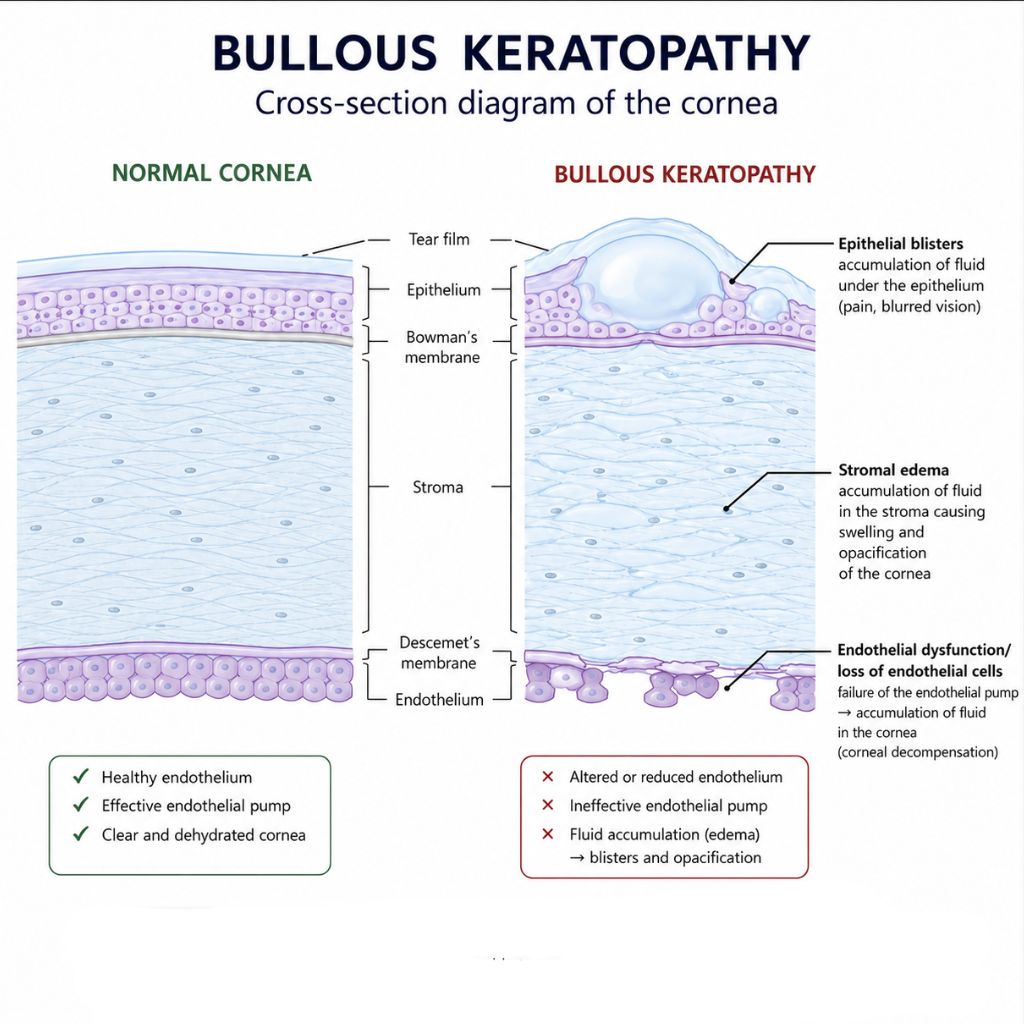
Bullous keratopathy is an eye disorder characterized by the formation of blisters on the surface of the cornea, caused by failure of the corneal endothelium.
This condition directly affects the surface of the eye and may progressively worsen if not properly managed in an ophthalmological setting.
The corneal endothelium, located at the back of the cornea, plays a crucial role in maintaining visual acuity and corneal transparency.
When the endothelium is damaged, often due to eye diseases, trauma, or surgeries such as cataract surgery, it can lead to fluid accumulation in the corneal stroma. This results in blister formation, opacity, and eventually a decrease in visual acuity.
In this context, corneal edema may develop, further impairing corneal transparency and visual quality.
What causes bullous keratopathy?
Certain conditions can increase the risk of damage to the corneal surface, including:
In case of bullous keratopathy, the symptoms can vary significantly from one patient to another, but they generally include:
Photophobia and/or a burning sensation when exposed to bright light ;
Excessive tearing ;
Red eyes ;
Blurred vision ;
Reduced visual acuity ;
Sometimes severe eye pain ;
In more advanced cases, blindness.
In some cases, symptoms may subside during the day, particularly after opening the eyes, with worsening upon waking.
What are the complications of bullous keratopathy?
Epithelial defects and corneal ulcers may develop, increasing visual discomfort and the risk of infection.
Corneal scarring and induced astigmatism can further reduce visual acuity.
In the long term, significant corneal damage may lead to vision loss.
The presence of corneal lesions and edema can make wearing contact lenses difficult and uncomfortable.
Fitting contact lenses, especially soft lenses, can become challenging in the context of bullous keratopathy.
How is bullous keratopathy diagnosed?
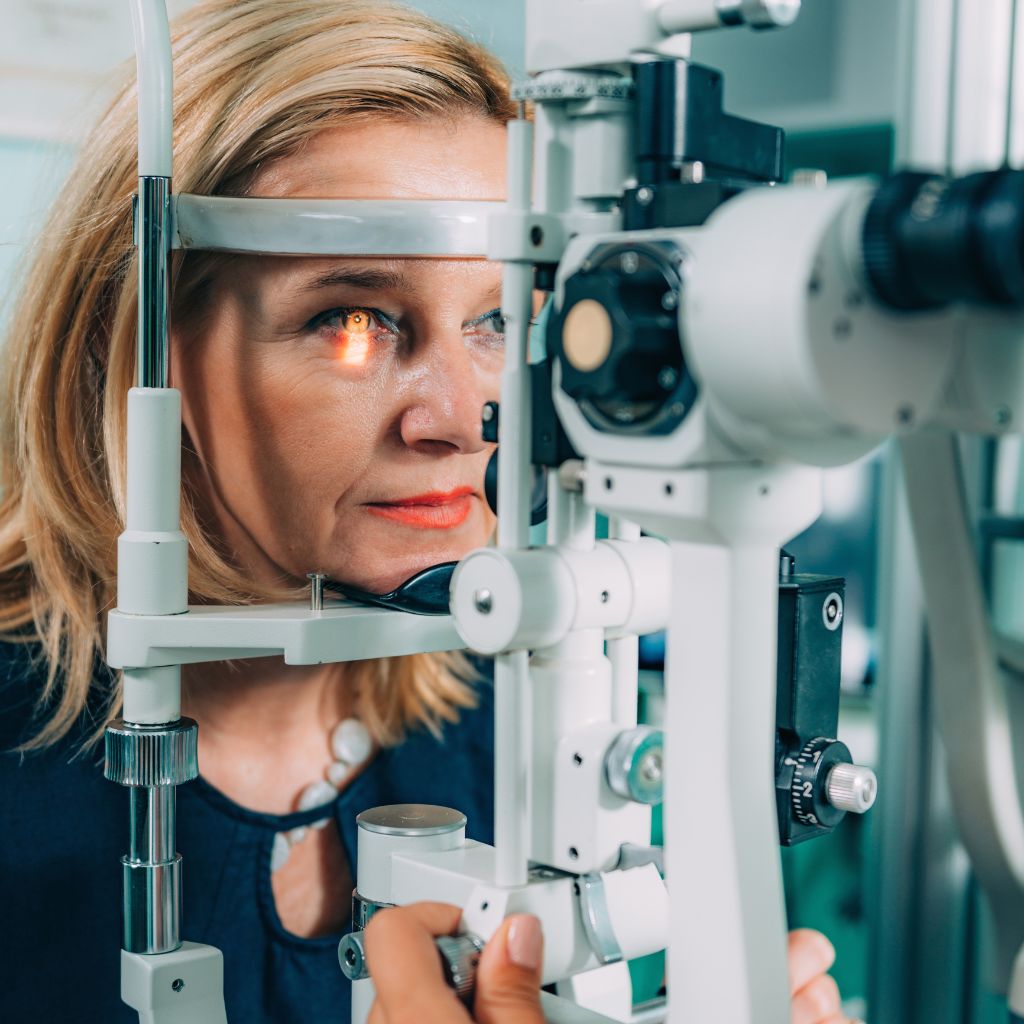
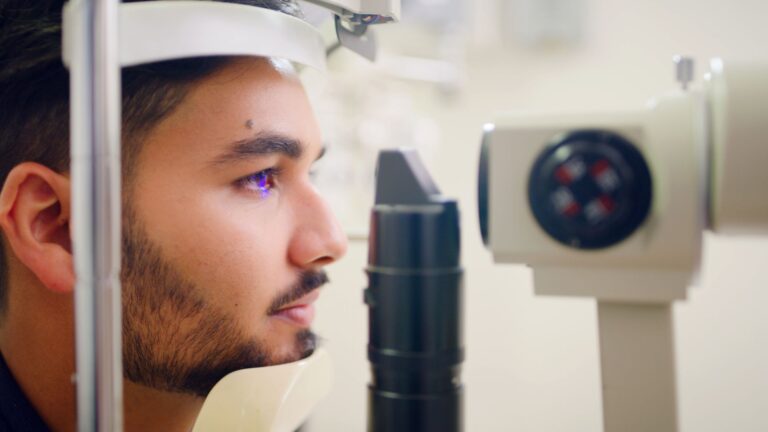
Diagnosis requires a thorough examination by an ophthalmologist, who may use imaging techniques such as fluorescein staining to observe corneal lesions.
The presence of opacities, redness, and inflammation is also assessed to detect any corneal lesions or ulcers.
A slit-lamp examination is routinely performed to analyze the structures of the anterior segment in detail. Fluorescein helps highlight epithelial damage.
This ophthalmological evaluation also determines whether one or both eyes are affected and helps guide appropriate management.
What is the management and the treatment of bullous keratopathy?
Some patients with bullous keratopathy require medication to reduce intraocular pressure, especially when the condition is associated with glaucoma.
Treatment of bullous keratopathy can be complex and depends on the severity of the disease.
Eye drops
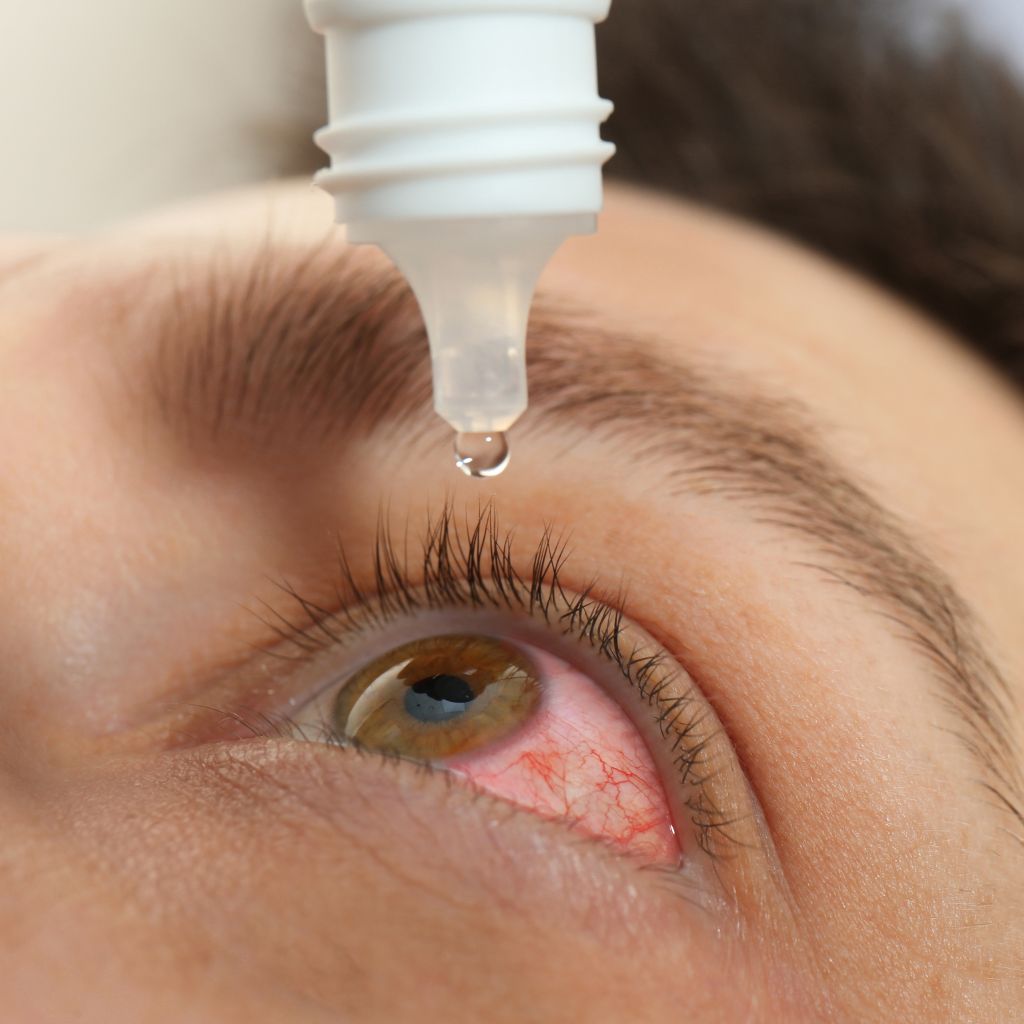
In early stages of bullous keratopathy, lubricating eye drops and ointments can help relieve symptoms by moisturizing the ocular surface.
Corticosteroid eye drops may also be prescribed to reduce inflammation.
Medical treatment may include ophthalmic drops, saline solutions, and other therapies depending on the severity of the disease.
Bandage contact lens
A bandage contact lens may be used to protect the corneal surface and relieve pain, particularly in cases of ruptured blisters.
It acts as a protective barrier, reducing friction from the eyelids.
The bandage contact lens improves patient comfort and promotes healing of the corneal epithelium.
However, its use requires regular ophthalmological monitoring due to the risk of infection.
Surgical treatment of bullous keratopathy
However, when conservative treatments are no longer effective, surgical options may be considered.
These include corneal transplant procedures to replace the damaged endothelium.
This type of surgery is performed in a controlled surgical setting, with careful postoperative follow-up.
The ophthalmic surgeon uses specific suturing and anesthesia techniques to ensure patient comfort during the procedure.
Postoperative management of bullous keratopathy is crucial, as complications such as infections or inflammation may occur.
Regular follow-up with an ophthalmologist is essential to prevent complications.
In conclusion
Bullous keratopathy is a condition that requires close attention to eye health. Thanks to advances in ophthalmology and the use of both medical and surgical techniques, it is now possible to effectively treat this condition, allowing patients to regain visual acuity and optimal ocular comfort.
Nous utilisons des cookies pour vous garantir la meilleure expérience sur notre site web. Si vous continuez à utiliser ce site, nous supposerons que vous en êtes satisfait.