Contact lenses for teenagers: at what age can they start wearing them?
Contact lenses for teenagers: at what age can they start wearing them?
Nowadays, contact lenses for teenagers are becoming an increasingly popular alternative to glasses. Available in both soft and rigid varieties, they provide a practical solution for vision correction, especially during sports and everyday activities.
But at what age can teenagers start wearing contact lenses ?
Contact lenses for teenagers: what is the recommended starting age?
In general, contact lenses for teenagers can be prescribed from the age of 12, provided they are mature enough to handle them independently, act responsibly, and strictly follow hygiene guidelines.
For myopia control (particularly with orthokeratology), teenagers may begin wearing contact lenses even earlier, following a medical assessment.
An ophthalmologist fits and prescribes contact lenses after a comprehensive eye examination and an assessment of the ocular surface, whether to correct myopia, hyperopia, astigmatism, or specific conditions such as keratoconus.
This assessment helps identify any potential contraindications and evaluate both distance vision and near vision to ensure optimal visual acuity.
Different types of contact lenses for teenagers
Several types of contact lenses for teenagers are available , including daily disposable lenses, monthly lenses, and toric lenses (for astigmatism).
Soft contact lenses made from silicone hydrogel are often preferred for their comfort and high oxygen permeability.
In addition, contact lens prescriptions for teenagers may include rigid lenses or Ortho-K lenses (worn overnight) in specific cases.
Contact lenses for teenagers: consultation and fitting
Before starting to wear contact lenses, a consultation with an ophthalmologist is essential. An ophthalmologist (or acontactologist) can perform the necessary assessment to determine the most suitabletype of contact lens for the young patient’s ocular physiology.
The specialist also determines the appropriate replacement schedule. Daily disposable lenses have the advantage of requiring no cleaning or maintenance, as they are discarded after each use, considerably reducing the risk of infection.
Biweekly and monthly contact lenses, on the other hand, require daily cleaning and disinfection using appropriate contact lens solutions.
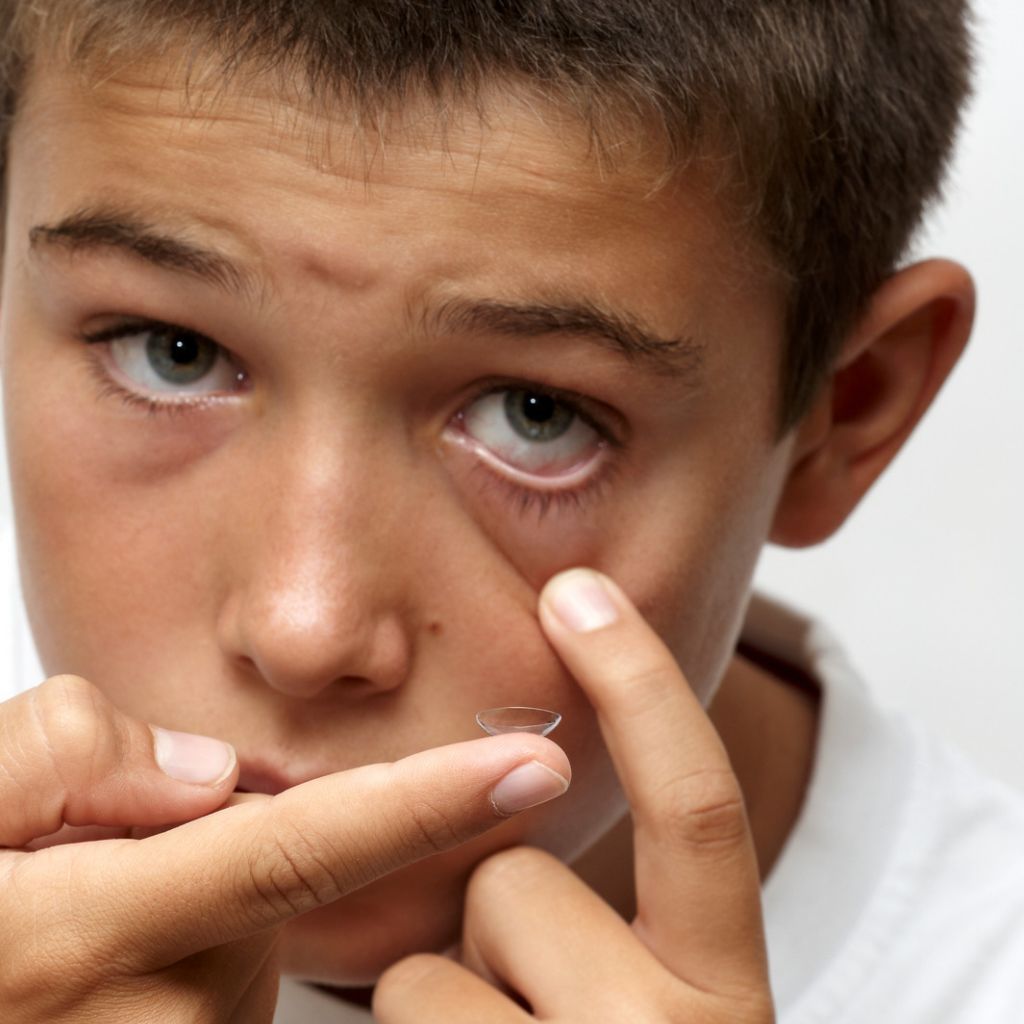
Time is also dedicated to ensuring a successful contact lens fitting and teaching teenagers how to insert, remove, and handle their lenses confidently.
Contact lenses for teenagers: best practices and care tips
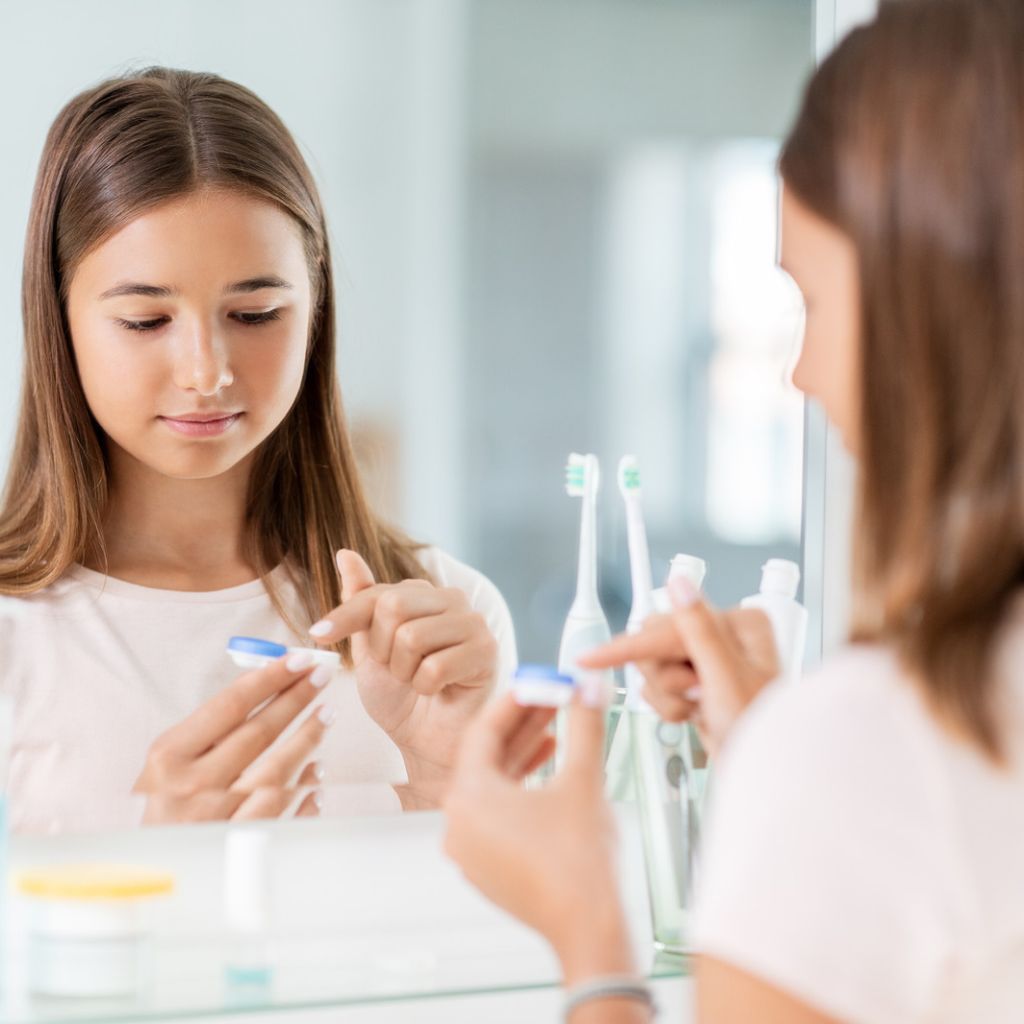
To ensure the safe use of contact lenses for teenagers, it is essential to follow proper hygiene and handling practices. Young wearers should be taught a few important rules to protect their eye health:
Hygiene: wash and dry your hands thoroughly before handling contact lenses.
Lens care: Use only the recommended contact lens solution for contact lens care, including cleaning, rinsing, and storing lenses in a clean case.
Wearing time: Strictly follow the daily wearing schedule recommended by the ophthalmologist to prevent ocular dryness, dry eyes, or insufficient oxygen supply to the cornea. In cases of temporary discomfort, rinsing the eye with sterile saline solution or using preservative-free artificial tears may help relieve symptoms.
Regular follow-up: Attend all scheduled check-ups with the ophthalmologist to ensure that the eyes continue to tolerate contact lenses well.
What are the risks and precautions associated with contact lenses for teenagers?
Poor hygiene practices or wearing contact lenses for too long can increase the risk of complications, including ocular dryness, irritation, and corneal infections (keratitis).
The accumulation of deposits on the lens surface or an uncomfortable foreign body sensation under the eyelid should be taken seriously. If redness, pain, or reduced vision occurs, teenagers should immediately remove their contact lenses and consult an ophthalmologist.
Finally, it is essential to avoid all contact with water (showering, tap water, etc.) to prevent bacterial or parasitic contamination.
In conclusion
In conclusion, contact lenses for teenagers can generally be prescribed from the age of 12. However, the decision primarily depends on the teenager’s maturity and ability to follow proper hygiene practices. Regular ophthalmological follow-up helps ensure safe and successful contact lens wear.
Nous utilisons des cookies pour vous garantir la meilleure expérience sur notre site web. Si vous continuez à utiliser ce site, nous supposerons que vous en êtes satisfait.