Glasses for children: how to encourage acceptance?
Receiving the diagnosis from the ophthalmologist is a crucial step. Whether correcting myopia, hyperopia, or astigmatism, a child’s acceptance of wearing glasses plays a key role in treatment success and proper visual acuity development.
Choosing the right glasses for children is therefore not only a medical decision, but also an important emotional and practical one.
Here are some COP9 recommendations to turn this constraint into a positive habit.
Why glasses are sometimes essential for children?
When an ophthalmologist or pediatric ophthalmologist identifies a need for correction during an eye examination or visual assessment, glasses become essential for visual health, comfort, and learning.
Glasses for children are prescribed when a refractive error or visual disorder is detected.
These visual defects prevent clear vision, whether at near or distance.
Without optical correction, a child may:
squint ;
suffer from headaches and eye strain ;
have blurred or double vision ;
present with reduced visual field awareness.
Corrective lenses, adapted in diopters and tailored to the prescription values, restore clear vision at both near and distance.
Certain myopia control lenses can even help slow myopia progression and preserve long-term visual acuity in both eyes.
Glasses for children : what if my child refuses to wear glasses?
If your child resists wearing glasses, begin with short periods during enjoyable activities (reading, drawing, screen time).
Praise them as soon as they wear their glasses spontaneously. Very quickly, the visual comfort experienced will outweigh the initial physical discomfort.
By turning glasses into a positive and empowering experience, you not only protect your child’s visual health but also support academic and social development.
Glasses for children : Explaining their need to improve acceptance
To encourage acceptance of glasses, children need to understand how their vision works, using simple and reassuring explanations.
Wearing glasses should never be perceived as a punishment, but rather as a comfort tool.
Identification: Show them book characters or well-known athletes who wear glasses.
Positive language: Explain that their glasses are “helpers” that allow them to see the board clearly at school or succeed in their favorite games.
If your child wears myopia control lenses, explain that these lenses help protect their long-term vision and may reduce the need for stronger correction later in life.
Whether your child is astigmatic, myopic, or hyperopic, everything begins with consistently wearing glasses!
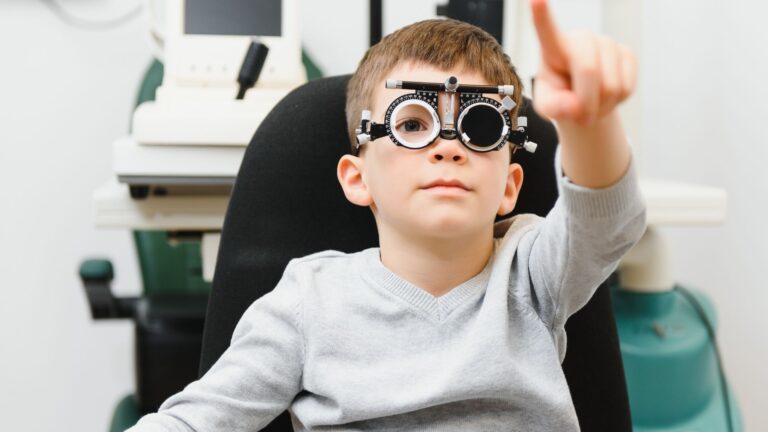
During the ophthalmologic examination, Dr. Stéphanie Zwillinger, our pediatric ophthalmologist, also explains that prescription glasses remain one of the most effective methods for correcting vision problems.
Glasses for children: why choosing the right pair matters
The choice of frames plays a decisive role in acceptance.
For glasses to be worn consistently, it’s important that children feel involved in choosing them.
The visit to the optician is fundamental: allow your child to choose a frame they like (color, shape), while ensuring proper ergonomic fit.
Frames adapted to the child’s nasal morphology prevent slipping and ensure that the optical axis remains properly aligned with the pupil.
Comfortable, durable, and aesthetically pleasing frames selected together with the child promote consistent daily wear.
Properly fitted glasses respect the visual field and ensure optimal lens positioning.
Even in cases of high prescriptions or significant differences between the two eyes, correct adjustment reduces adaptation time and minimizes the desire to remove glasses frequently.
Glasses for children: why regular follow-up matters
Regular follow-up appointments allow prescription adjustments as needed.If the child presents with strabismus or a risk of amblyopia (“lazy eye”), strict adherence to correction is essential.
In some cases, orthoptic therapy sessions complement glasses to stimulate binocular vision and facilitate neurological adaptation to the new correction.
Supporting children’s daily life with glasses
A child who wears glasses should be positively encouraged.
Remind them that their prescription is designed to correct vision and improve focusing ability, reinforcing adherence.
Monitor signs of discomfort such as blurred vision, eye strain, or headaches, these indicators help ophthalmologists quickly adjust the prescription if necessary.
In cases of persistent refusal, consultation with a pediatric ophthalmologist is recommended.
In conclusion
Glasses for children are far more than simple optical correction : they are a true asset for vision and self-confidence.
By correcting refractive errors and accommodation disorders, prescription lenses provide optimal corrected visual acuity and reduce symptoms of eye strain.
After a comprehensive eye examination, appropriate correction improves daily comfort, classroom attention, and learning performance.
A well-chosen, comfortable, age-appropriate frame promotes acceptance and strengthens self-esteem.
By addressing visual disorders early, glasses play a crucial role in preserving long-term visual health and supporting your child’s development !
Nous utilisons des cookies pour vous garantir la meilleure expérience sur notre site web. Si vous continuez à utiliser ce site, nous supposerons que vous en êtes satisfait.