What changes can occur in vision after the age of 60?
What changes can occur in vision after the age of 60?
As we age, our vision naturally changes: reading may become less comfortable, stronger lighting may be needed, and sensitivity to glare may increase. But how can you tell the difference between normal age-related changes and signs of an eye disease?
Find out about the natural changes in vision after the age of 60, the eye conditions to watch out for, and COP9’s advice on how to preserve your eye health.
Natural age-related changes in vision
Vision after the age of 60 deserves particular attention: while some changes are linked to the natural ageing of the eye, others may reveal an eye condition requiring medical care.
Established presbyopia and reduced accommodation
With age, the lens gradually loses its flexibility.
The eye’s ability to accommodate (focus on nearby objects) decreases significantly.
This can result in difficulty reading small print, eye strain or headaches at the end of the day.
Wearing suitable prescription glasses or progressive lenses can help restore optimal reading comfort.
Changes in refractive errors
Existing refractive errors, such as myopia, hyperopia or astigmatism, may also change and evolve over the years.
A regular eye examination allows refraction to be measured accurately and corrective lenses to be adjusted accordingly.
Dry eye and changes to the eyelids
Ageing of the structures of the eye and eyelids can affect the tear film.
A reduction in the quality or quantity of tears can lead to dry eye, causing stinging, irritation or a gritty sensation.
Common eye conditions after the age of 60
Unlike physiological changes, these conditions are eye diseases that require a specific diagnosis and ophthalmological follow-up.
Cataracts
The progressive clouding of the lens is very common among older adults.
Cataracts can cause reduced visual acuity, blurred or cloudy vision, halos around lights and increased sensitivity to light.
When the symptoms begin to significantly affect everyday life, the ophthalmologist may recommend cataract surgery to replace the clouded lens with an intraocular lens implant.
Age-related macular degeneration (AMD)
AMD affects the macula, the central area of the retina responsible for detailed vision.
It may cause blurred central vision, distortion of straight lines (metamorphopsia) or the appearance of a dark spot in the centre of the visual field.
It is one of the leading causes of impaired vision after the age of 60 and requires early detection and retinal monitoring.
Glaucoma
Glaucoma is a chronic disease of the optic nerve, often associated with increased intraocular pressure.
The danger lies in its silent progression: it gradually damages the peripheral visual field, without pain or warning symptoms in its early stages.
Regular monitoring of intraocular pressure and the visual field by an ophthalmologist is essential to help prevent irreversible vision loss.
Diabetic retinopathy and retinal disorders
In patients with diabetes, damage to the small blood vessels of the retina (diabetic retinopathy) can cause serious visual complications.
Other retinal conditions, such as an epiretinal membrane or a macular hole, may also occur with age and require specialist care.
The importance of regular ophthalmological follow-up
When it comes to vision after the age of 60, regular ophthalmological follow-up helps detect asymptomatic conditions at an early stage and ensures that your visual correction remains appropriate.
Eye examination and the role of the orthoptist
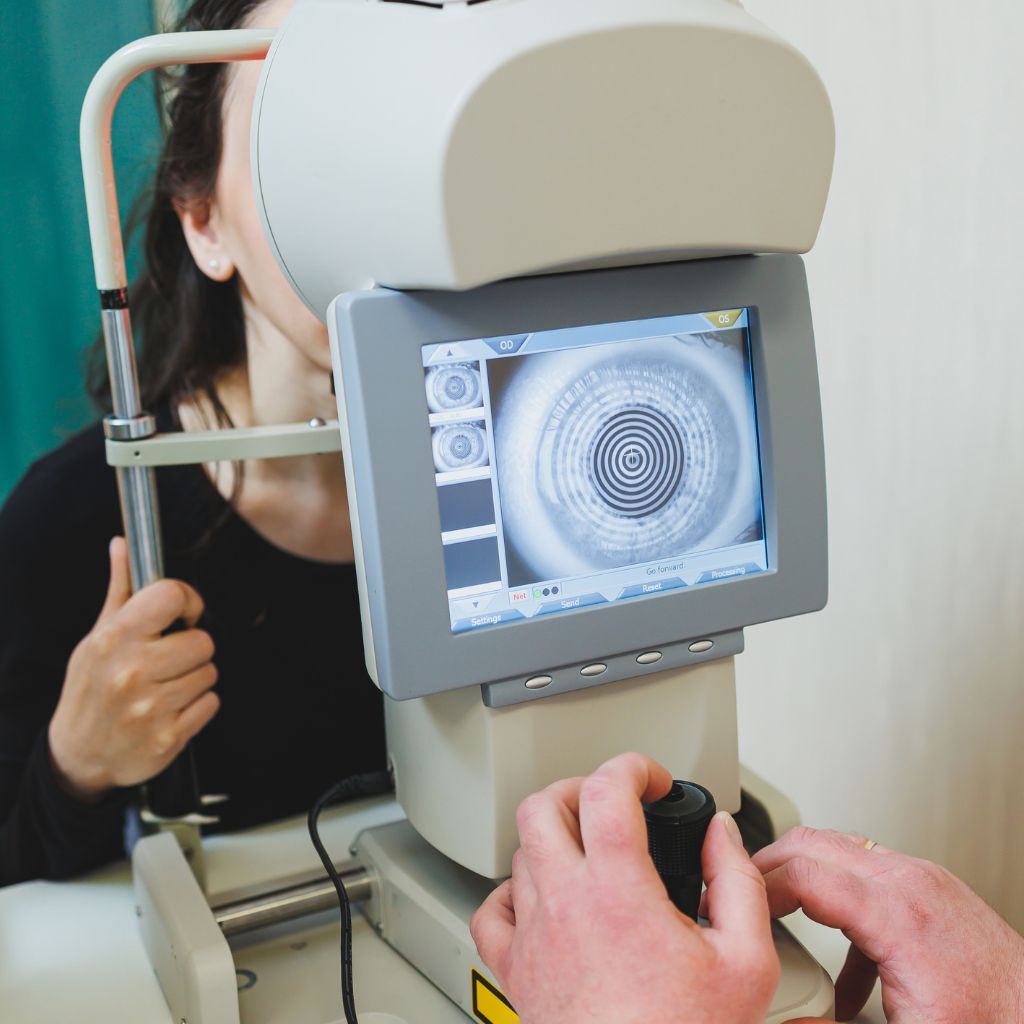
A comprehensive ophthalmological examination allows the condition of the lens, retina, optic nerve and intraocular pressure to be assessed.
As part of the care pathway, an orthoptist may also be involved in assessing the visual field or providing visual rehabilitation in cases of binocular vision disorders or low vision.
Which signs should prompt you to seek medical advice?
You should consult your ophthalmologist promptly if sudden or troublesome symptoms appear, particularly:
double vision (diplopia);
straight lines that appear wavy or distorted;
a rapid decline in visual acuity in one or both eyes;
the appearance of a dark curtain, flashes of light or unusual floaters.
In conclusion
Although changes in vision after the age of 60 are normal, vision loss is not inevitable.
With regular screening, appropriate management of chronic diseases such as diabetes and hypertension, and suitable treatments such as implants, injections and corrective lenses, it is possible to preserve eye health and quality of life.
A very useful reminder that changes in vision should not simply be considered a normal part of getting older. Regular eye examinations after 60 can help identify vision problems early and ensure the right eye care when needed. I appreciate the focus on maintaining good vision and eye health with age.
Nous utilisons des cookies pour vous garantir la meilleure expérience sur notre site web. Si vous continuez à utiliser ce site, nous supposerons que vous en êtes satisfait.





A very useful reminder that changes in vision should not simply be considered a normal part of getting older. Regular eye examinations after 60 can help identify vision problems early and ensure the right eye care when needed. I appreciate the focus on maintaining good vision and eye health with age.