
Eye tracking disorders in children can go unnoticed, even though they significantly impact learning and visual health.
Difficulty following a line, visual fatigue, poor vision… These signs deserve all your attention.
In this COP9 article, discover how to identify these visual disorders and when to consult an ophthalmologist.
Eye tracking disorders in children refer to a group of visual dysfunctions that affect a child’s ability to follow moving objects smoothly.
These disorders can have a significant impact on visual acuity, coordination, and overall development of the child.
They may cause poor functional vision despite normal acuity measured during a standard eye test.
This means that a child’s vision may appear normal during routine screening, while still presenting a genuine visual disorder in dynamic situations such as reading or tracking moving objects.
They are most often linked to oculomotor coordination disorders or functional neurovisual dysfunctions involving the interaction between the eyes and the brain.
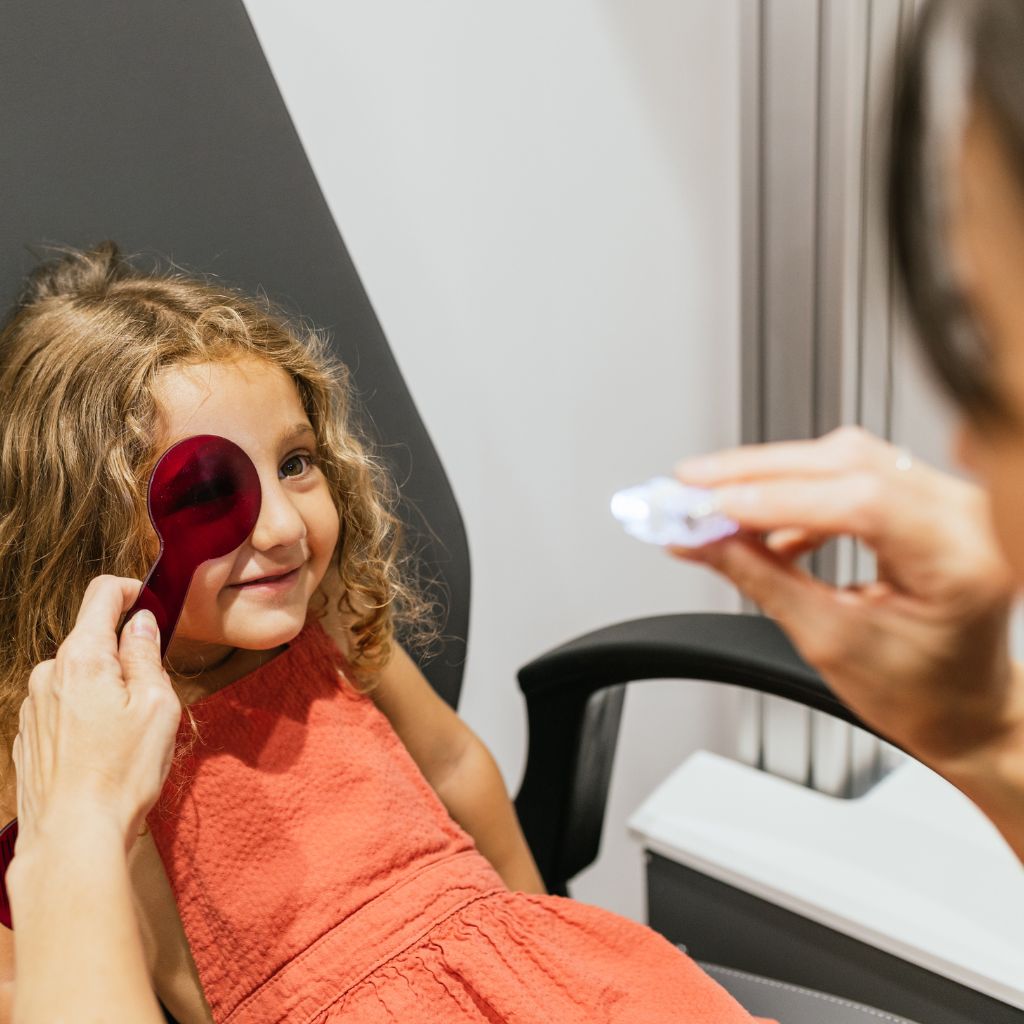
This type of eye disorder may be part of broader ocular conditions requiring a comprehensive eye examination.
In some cases, these difficulties may be associated with amblyopia or a history of early oculomotor disorders requiring close monitoring.
Eye tracking allows both eyes to work together in coordination to follow a word, a line, or a moving object.
An abnormality in this mechanism can disrupt accommodation and binocular vision.
Without proper tracking, a child may experience unstable gaze or difficulty maintaining effective fixation, such as losing their place while reading or developing visual difficulties that affect concentration.
Eye tracking disorders in children may be mistaken for attention deficit, while they are actually related to an ophthalmic issue.
Good coordination between both eyes is essential to maintain stable and comfortable vision.

Various conditions may be responsible for eye tracking disorders in children. Certain abnormalities in the development of the eyeball can also affect the quality of eye movements.
For example, conditions such as strabismus can disrupt eye alignment, making it difficult to smoothly track a moving object.
Similarly, refractive errors such as myopia or hyperopia can cause blurred vision, making it harder to follow movement.
Poor accommodation may also affect gaze stability. Convergence insufficiency can further aggravate these disorders, particularly during activities requiring prolonged near vision such as reading or writing.
A comprehensive eye examination, including a fundus exam, helps rule out deeper ocular involvement.
Children with eye tracking disorders may show clear signs such as:
difficulty following objects at near or far distances;
uncoordinated eye movements;
temporary vision disturbances;
blurred or unclear vision;
difficulty maintaining visual concentration.
These symptoms may affect one eye or both eyes and can vary in intensity depending on fatigue or the duration of visual effort.

Frequent headaches or visual fatigue may also indicate an underlying visual disorder in children, often reported by parents during ophthalmological examinations.
In some cases, these disorders may lead to diplopia (double vision). They may also become more noticeable when shifting from distance vision to near vision.
A child who:
closes one eye;
tilts their head;
seems to have poor vision during schoolwork
These three signs should prompt parents to consult an ophthalmologist or eye specialist for a comprehensive vision assessment.
Early screening is crucial for diagnosing eye tracking disorders.
It is especially important if there is a family history of visual disorders or if the child has previously experienced visual issues in early childhood.
A vision examination performed by an ophthalmologist or orthoptist will assess visual acuity and overall eye health.
Specific tests, such as binocular vision and eye movement assessments, can help detect potential disorders.

An orthoptic assessment often complements the ophthalmological examination to precisely evaluate coordination between both eyes.
This evaluation allows for detailed analysis of convergence, gaze stability, and eye movement efficiency in real-life situations.
An appropriate prescription, whether glasses or an orthoptic rehabilitation program, can correct certain abnormalities and help the child achieve more comfortable vision.
Treatment options depend on the severity of the disorder.
In many cases, visual correction such as prescription glasses or contact lenses may be recommended to improve vision.
For more complex eye tracking disorders, orthoptic rehabilitation may be required. Orthoptic therapy aims to improve eye coordination and optimize visual acuity to its highest potential.
In rare cases involving structural pathology, surgical treatment may be considered by a specialized ophthalmologist.

Eye tracking disorders can be confused with neurovisual disorders or ADHD, as they may lead to difficulties in concentration and reading.
A child may appear inattentive when they are actually struggling to stabilize their gaze or maintain proper fixation.
Certain functional visual impairments can affect academic performance without being detected during a simple eye test.
A comprehensive ophthalmological evaluation, including a detailed vision examination, is therefore essential before considering a purely neurological cause.
Eye tracking disorders in children require special attention, as they can affect not only vision but also learning and overall development.
Regular ophthalmological examinations, frequent vision assessments, and clear communication with eye care professionals are essential to preserve eye health and visual function.
It is crucial to consult an ophthalmologist at the first signs in order to ensure better visual acuity and prevent long-term visual disorders!