Congenital eye malformations in children can have a significant impact on visual acuity and on overall development.
They may affect different structures of the eye, such as the eyeball, pupil, or retina, and can sometimes alter the visual field. Some of these eye malformations are hereditary or linked to a family history.
Continue reading to get an overview of the main congenital eye malformations.
Malformations of external structures and the anterior segment
Eyelid malformations
Conditions such as ectropion, entropion, or ptosis are developmental abnormalities that may require pediatric ophthalmological follow-up.
In children, these anomalies can interfere with proper eye opening or disrupt normal visual development.
Early management is essential to prevent impairment of visual acuity and binocular vision.
Anterior segment malformations
Structural abnormalities of the eye, such as the presence of a membrane on the cornea or ciliary body hyperplasia, can also affect visual function.
In children, these conditions may disrupt normal eye development and early visual quality.
Specialized follow-up helps assess their impact and adapt management if necessary.
Keratoconus
Keratoconus is a progressive deformation of the cornea, causing it to become cone-shaped.
This corneal condition can lead to significant visual impairment and vision disorders.
In severe cases, refractive surgery or a corneal transplant may be required.
Lens opacification (congenital cataract)
Congenital cataract presents as a clouding of the eye’s natural lens, reducing visual clarity.
Surgery is usually required to remove the opaque lens and implant an intraocular lens. We also discuss congenital cataract surgery in this article.
Retinal and fundus malformations
Juvenile macular dystrophy
This retinal condition affects the macula, which is responsible for central vision.
It may alter the central visual field and sometimes requires specialized imaging, such as angiography or a fundus examination.
In children, it can impact reading and activities requiring fine vision, highlighting the importance of early detection.
Congenital retinopathy
Some forms of retinopathy are present at birth and affect the retinal blood vessels, leading to significant visual problems.
These retinal lesions disrupt the transmission of visual information to the brain.
In infants and young children, they may compromise visual development and require early specialized follow-up.
Optic nerve malformations
Developmental malformations of the optic nerve can cause significant visual impairment, sometimes affecting each eye differently.
The optic nerve transmits visual information from the eye to the brain. When it is malformed or underdeveloped, image transmission may be altered.
Functional vision disorders
Amblyopia
This condition is characterized by reduced vision in one eye, often due to strabismus (eye misalignment) or uncorrected astigmatism. It disrupts binocular vision.
Regular monitoring of those congenital eye malformations
It is essential for parents to be attentive to signs of vision problems and to have their child’s eyes examined.
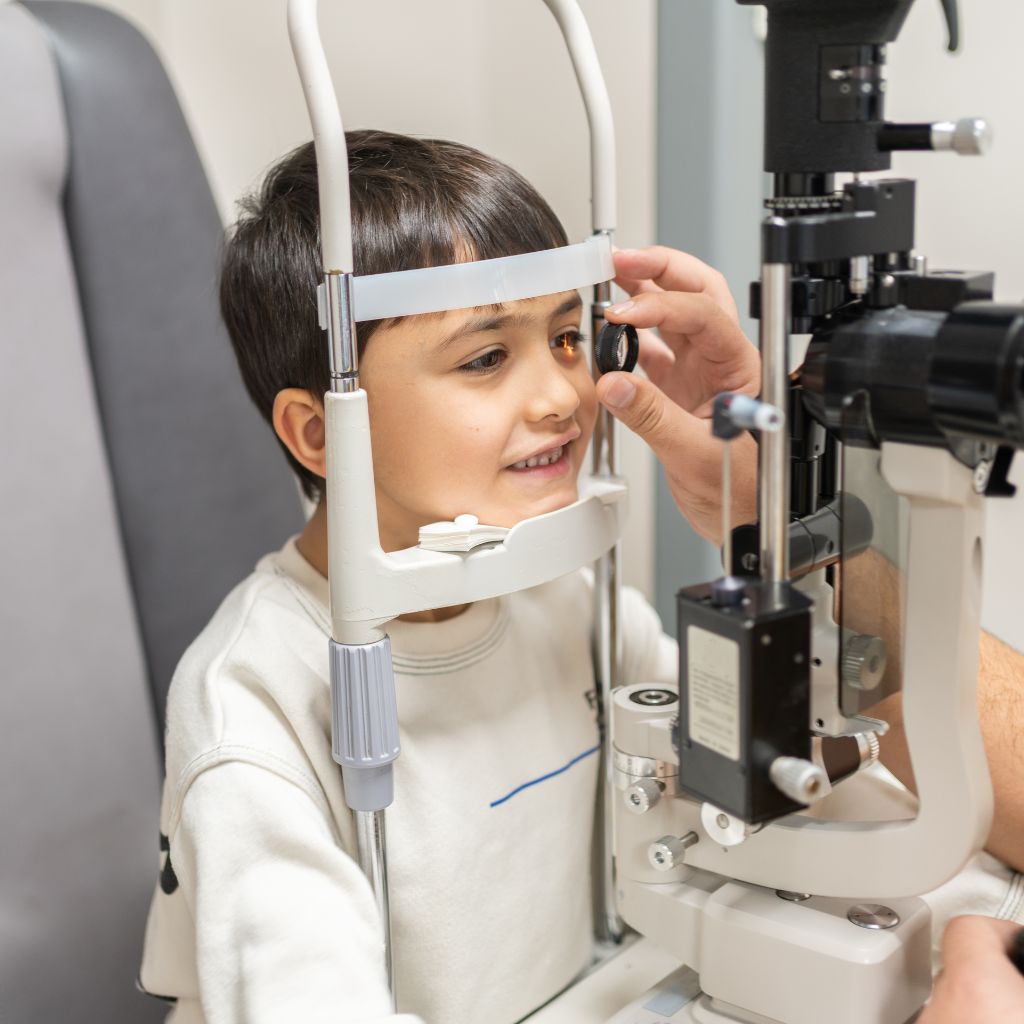
A comprehensive eye examination, including vision testing and sometimes imaging, allows for early diagnosis of these eye conditions.
It is recommended to consult an ophthalmologist in a pediatric-adapted eye care center, such as our COP9 clinic in Paris.
A multidisciplinary team approach is crucial to ensure appropriate care for each child, taking into account their development and specific needs.
Conclusion
Congenital eye malformations encompass a range of eye conditions that can have a lasting impact on a child’s vision.
Early detection, regular monitoring, and appropriate management help limit visual impairment and optimize visual development. If there is any doubt, it is essential to consult a specialist promptly to ensure the best possible care.
Nous utilisons des cookies pour vous garantir la meilleure expérience sur notre site web. Si vous continuez à utiliser ce site, nous supposerons que vous en êtes satisfait.