A retinal implant to restore sight: a promising breakthrough against dry AMD
While treatments exist for the wet form of AMD, the atrophic (or “dry”) form still has no solution today.
But a new approach could change that: a neurostimulation device combining a retinal implant and camera-equipped glasses, a genuine ophthalmologic therapy for people suffering from dry AMD.
How does the Prima retinal implant work?
Developed through an international collaboration (Inserm, CNRS, Sorbonne University, Rothschild Foundation, Quinze-Vingts Hospital, Stanford University and Science Corporation), the Prima system combines optical technology and retinal neurostimulation.
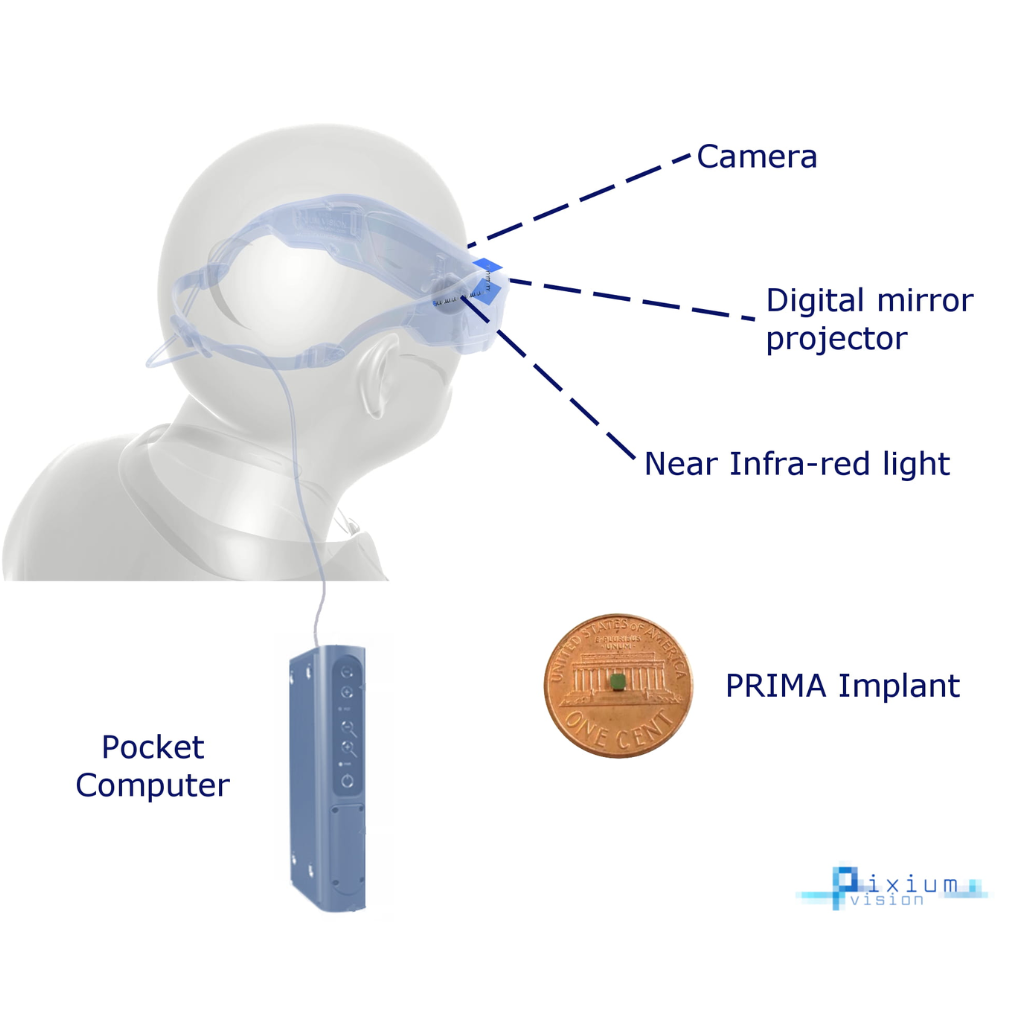
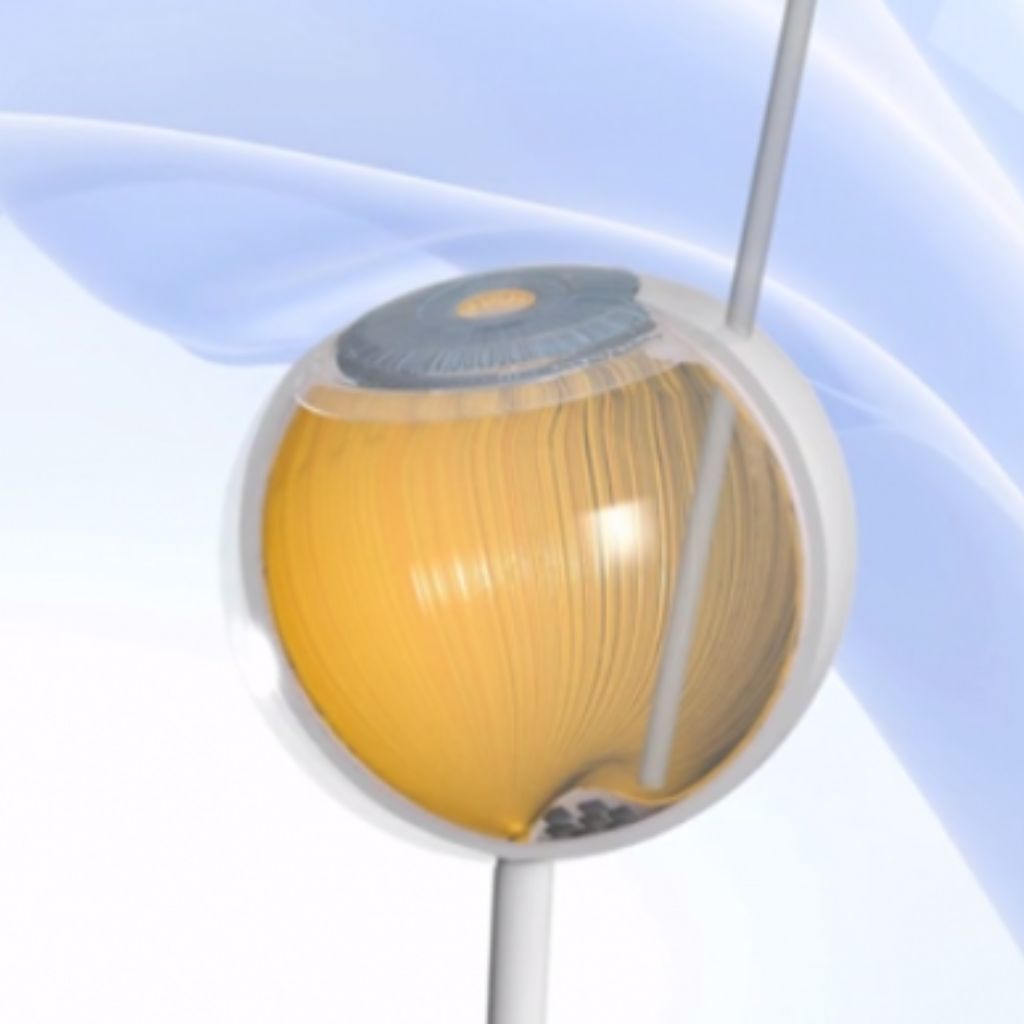
In practical terms, a photovoltaic microchip only 2 mm wide is implanted beneath the retina during a delicate surgical procedure performed by an ophthalmologist specializing in retinal surgery.
This type of procedure allows people with dry AMD to potentially regain functional visual perception and, ultimately, achieve useful vision in daily life.
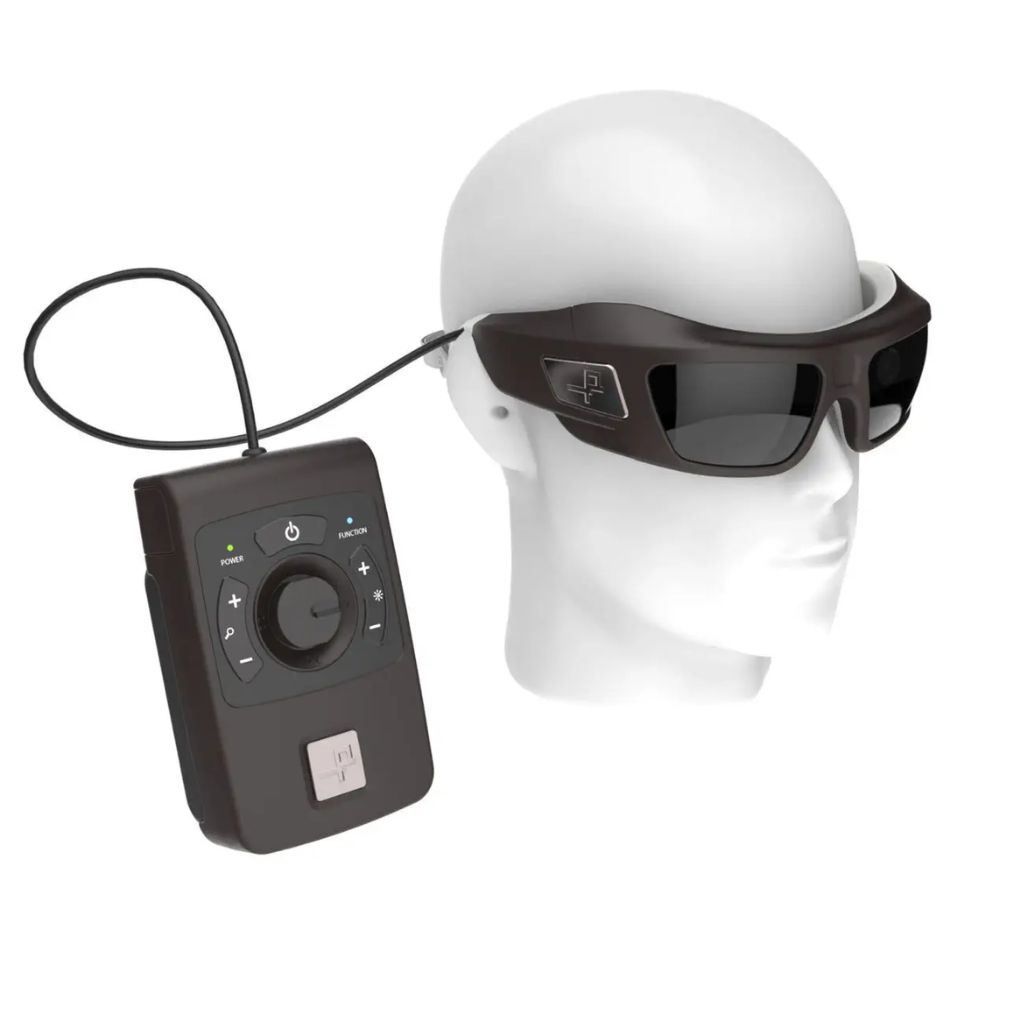
The augmented reality glasses, equipped with a miniature camera, capture images and transmit them to a small computer.
This computer converts the images into infrared signals, which are then projected onto the retinal implant.
The implant stimulates the retina’s remaining nerve cells, bypassing the photoreceptor cells destroyed by the disease, allowing the brain to partially regain sight.
This device enables the perception of shapes, letters, and even words, a first in treating this severe visual impairment.
A reminder of what AMD is
Age-related macular degeneration (AMD) is the leading cause of visual impairment after age 60. It affects the macula, the central area of the eyeball responsible for central vision, which is essential for reading, writing, and recognizing faces.
This eye condition is linked to aging and the degeneration of photoreceptor cells.
Often, the progressive loss of vision develops discreetly, which is why early detection through regular eye exams is crucial.
What are the results of this retinal implant for patients with dry AMD?
The study, published in the New England Journal of Medicine, followed 38 patients suffering from atrophic AMD, with an average age of 79 years.
The results are very encouraging: 81% of participants improved their visual acuity after receiving the retinal implant, gaining the ability to read 10 to 15 additional letters on vision charts.
Even a partial improvement represents a major step forward for patients facing a decline in vision that makes reading, writing, or recognizing faces difficult.
Some patients could regain functional central vision, could read words, and recognize numbers while preserving their peripheral visual field, a major step towards more complete vision.
The researchers also observe that the progression of the disease could be better monitored through regular ophthalmological follow-up and early detection of the first signs of visual impairment.
What are the limitations and prospects for this technology?
As with any ophthalmologic surgery, the retinal implant still carries some risks: ocular hypertension, retinal detachment, or subretinal hemorrhage.
These complications have been successfully managed, and long-term follow-up is underway to confirm the treatment’s safety.
Despite these precautions, ophthalmic surgeon Professor José-Alain Sahel emphasizes that the observed benefits far outweigh the side effects.
Patients suffering from central vision loss now have access to an innovative therapeutic solution — in a condition that, until now, had no curative treatment.
These combined methods could help patients interpret their regained vision, adapt their visual field, and improve their autonomy through suitable visual aids.
In conclusion
The retinal implant marks a crucial milestone in the fight against central blindness caused by dry age-related macular degeneration (AMD).
Thanks to retinal neurostimulation, patients can now hope to partially regain sight, read again, and maintain their quality of life.
The Prima device represents a turning point in eye health research, paving the way for a new generation of treatments that bring hope to people with visual impairments.
To maximize the chances of preserving vision, early screening for AMD remains essential, especially for those at risk or noticing gradual vision loss.
Nous utilisons des cookies pour vous garantir la meilleure expérience sur notre site web. Si vous continuez à utiliser ce site, nous supposerons que vous en êtes satisfait.