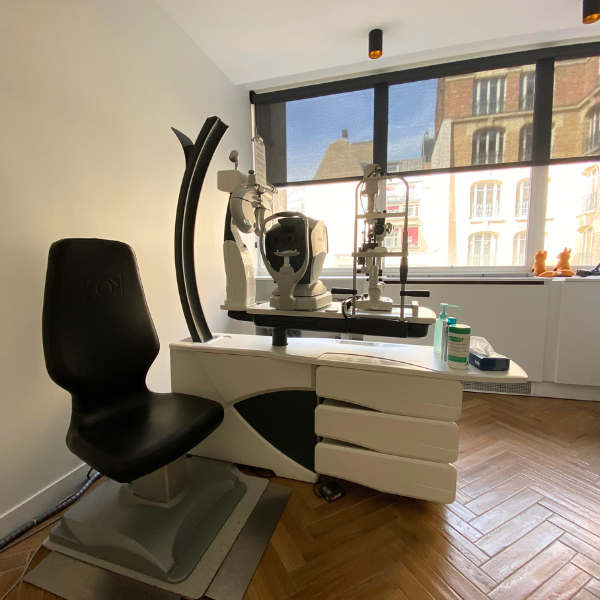
Color vision screening in children is a crucial step in detecting potential visual disorders !
These may include congenital anomalies, such as color blindness, which affect color perception and can impact both visual acuity and the child’s overall visual function.
Here are the main methods and key facts to understand your child’s visual development and preserve their eye health.
Why is color vision screening in children essential?
Color vision screening in children is particularly important during the school years, as visual disorders such as myopia, hyperopia, or binocular vision problems can directly influence their academic performance.
A comprehensive eye examination assesses coordination of both eyes, as well as visual field, and color perception. Certain ophthalmic conditions, such as age-related macular degeneration (AMD), lens disorders, or macular diseases, can be detected early and treated appropriately.
Regular visual check-ups help identify deficiencies before they permanently affect visual health and ocular development.
Color vision screening: tests performed during an eye exam
An ophthalmologist or optometrist can perform a full vision assessment, including:
refraction testing,
near and distance visual acuity measurement,
examination of the eye, cornea, and lens condition,
specific tests such as Ishihara plates to detect color perception anomalies.
These tests allow each eye to be examined separately, ensuring an accurate ophthalmological diagnosis.
If a hereditary deficiency is suspected, the doctor may recommend regular ophthalmologic follow-up or an orthoptic assessment to complete the evaluation.
How to screen for color vision at home with simple tests
Parents can also help detect visual issues by observing their child’s visual behavior.
For example:
frequent confusion of certain colors (green/red, blue/purple),
difficulty recognizingcolored objects,
holding screens or books too close,
signs of visual discomfort or eye strain.
These symptoms may indicate color vision deficiency or another eye condition. If in doubt, it is recommended to consult aneye specialist for a comprehensive visual assessment.
Behavioral observation: a key tool in color vision screening
Orthoptists and ophthalmologists are trained to evaluate not only the child’s vision but also their visual interactions, including:
eye convergence,
coordination of eye movements,
the ability to maintain binocular vision.
Visual fatigue during color-based activities may be an early sign of visual dysfunction. Behavioral observation is therefore an important part of orthoptic assessment and ophthalmologic follow-up.
Our orthoptist team
Fun tests for color vision screening in children
There are fun and age-appropriate ophthalmologic tests for color vision screening in a stress-free way developed especially for younger children.
These tools use visual games, images, or interactive apps to assess the child’s ability to recognize and distinguish colors.
Other tests examine macular function and central vision, which are essential for reading and school activities.
Such eye exams help detect early visual deficiencies before they impact global visual development.
Follow-up and visual rehabilitation after color vision screening in Children
If a color vision disorder or associated ocular condition is diagnosed, regular follow-up with an ophthalmologist is essential.
Depending on the case, several solutions may be proposed:
orthoptic rehabilitation to strengthen visual coordination and eye function,
corrective glasses or lenses if a refractive error is present,
personalized support to adapt school and daily activities.
This comprehensive approach supports the child’s visual health and prevents long-term ophthalmic complications.
Color vision screening and other visual disorders: impact on daily life
Color vision disorders in children can affect daily activities, self-confidence, and learning ability.
In addition, other potential visual dysfunctions such as strabismus, amblyopia, or convergence insufficiency may arise from poor visual perception.
These eye conditions can cause double vision, reading difficulties, or trouble with depth perception.
That’s why it is vital for parents, teachers, and healthcare professionals to work together to detect these disorders early and create a coordinated care pathway tailored to each child.
If you have concerns, don’t hesitate to consult an ophthalmologist for a complete eye exam, including visual field assessment, ocular evaluation, and specialized ophthalmic tests.
In conclusion
Regular ophthalmologic follow-up is key to monitoring the child’s visual development and detecting potential eye diseases, such as color vision deficiencies, at an early stage.
With a tailored approach combining orthoptics, ophthalmology, and visual prevention, each child can develop balanced vision, accurate color perception, and an overall better visual quality of life.
Nous utilisons des cookies pour vous garantir la meilleure expérience sur notre site web. Si vous continuez à utiliser ce site, nous supposerons que vous en êtes satisfait.